
To many, autotune is a stylistic force shaping modern music. To others, it’s a tool for perfection. And to some, it’s replacing authenticity in music. Artists Aside speaks to three producers who share their perspectives from inside the studio.
In 1998, music icon Cher marked her return to the charts with the dance hit ‘Believe’. The song was significant for many reasons. Not only did it put Cher back in the spotlight after a successful career in the 60s and 70s, but it introduced the mainstream music world to a new kind of sound – autotuned vocals.
Autotune, which advanced on existing pitch correction technology, was first introduced onto the market in 1997, just a year before ‘Believe’ was released. Its creation of a deliberate glitchy, robotic sound caught the attention of audiences everywhere, with American media company Knight Ridder bidding it ‘like nothing she’s ever done’.
HOW IT WORKS
Developed by Antares founder Dr. Andy Hildebrand, autotune has been used across genres for reasons both practical and aesthetic. Antares Audio Technologies released the audio processing software after it received acclaim on the National Association of Music Merchants (NAMM) Show in 1996. When analysing seismic data for locating oil deposits, Ph.D. research engineer Hildebrand adapted his work into autocorrelation into correcting pitch.
London-based songwriter and producer Charlie Bryce Wallace has encountered autotune during his career. He’s worked with artists across Europe, Asia and the USA, including writing songs for Grammy-Winner Ben Platt and pop group Steps. Bryce Wallace says AutoTune has become synonymous with anything that’s a pitch correction device, “kind of like Hoover or Jacuzzi.”
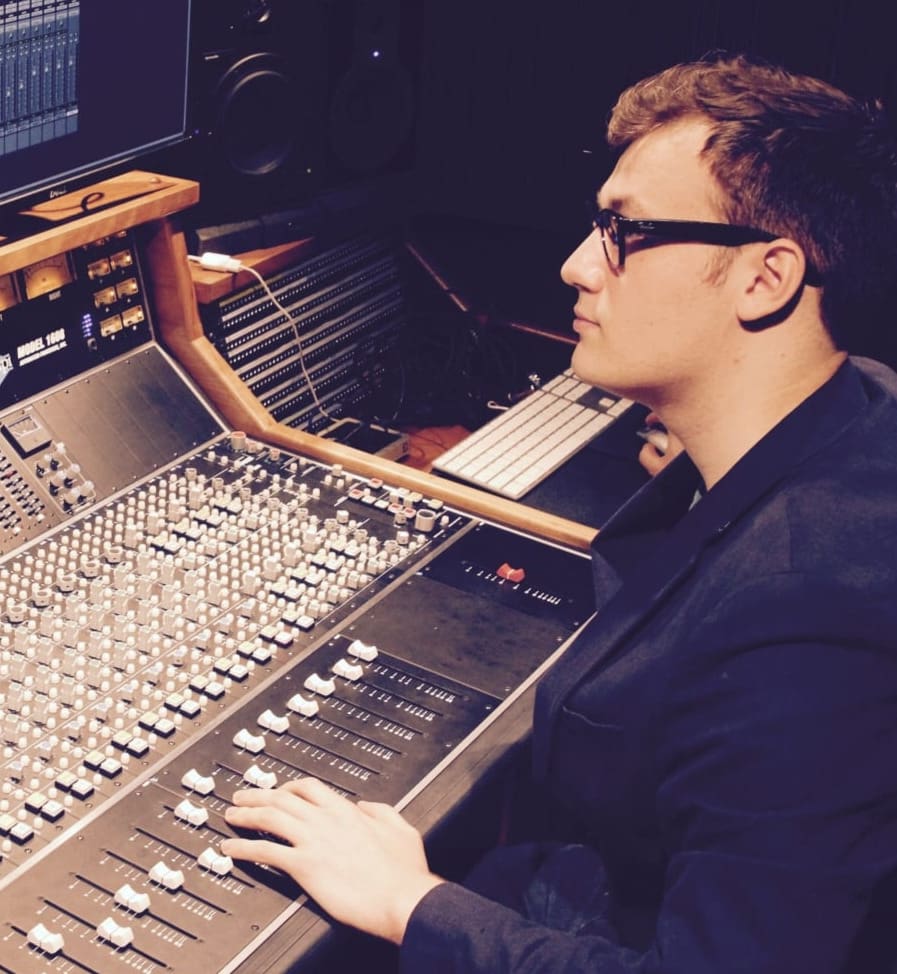
As he explains, there are two broad categories of pitch correction devices.
The first is automatic pitch correction, which includes Antares’ version of AutoTune.
“That’s a device that when you send audio to it, you set a scale or mode into the device. Then the device recognises the pitches of the incoming signal and it shifts it towards the nearest notes of the scale or the mode that you select. You can use that in a studio context or you can use it in a live context. You can also use it for shows,” he says.
The second category is manual pitch correction, one of these products being Melodyne by German manufacturer Celemony, developed in 2001.
Bryce Wallace says: “That is essentially analysing audio that you give to it. You are given a graphical user interface and you can manually manipulate each individual note so you have more control over the audio.
“I think it’s misunderstood as a kind of vague, mysterious thing from the outside, but it’s not that scary or mysterious.”
Eliza Willmott is a producer, visual artist and singer-songwriter under the alias Azileli, releasing her own electronic EP ‘Fruiting Parts’ in 2024. She emphasises that the process of pitch correction isn’t just as simple as just a click of a button.
She says: “If the singing voice is completely out of key then there’s a lot more work that would have to go into actually making it fit with the song.”
UK-based producer and composer Ben Haynes is another artist whose career involves working alongside pitch correction. His work spans the genres of pop, acoustic, rock, country and indie.
He describes that “if someone’s been singing all their life they’re gonna have an amazing feel to their voice, and whether you use auto-tune or not it’s going to sound amazing.”
THE IMPORTANCE OF AUTHENTICITY
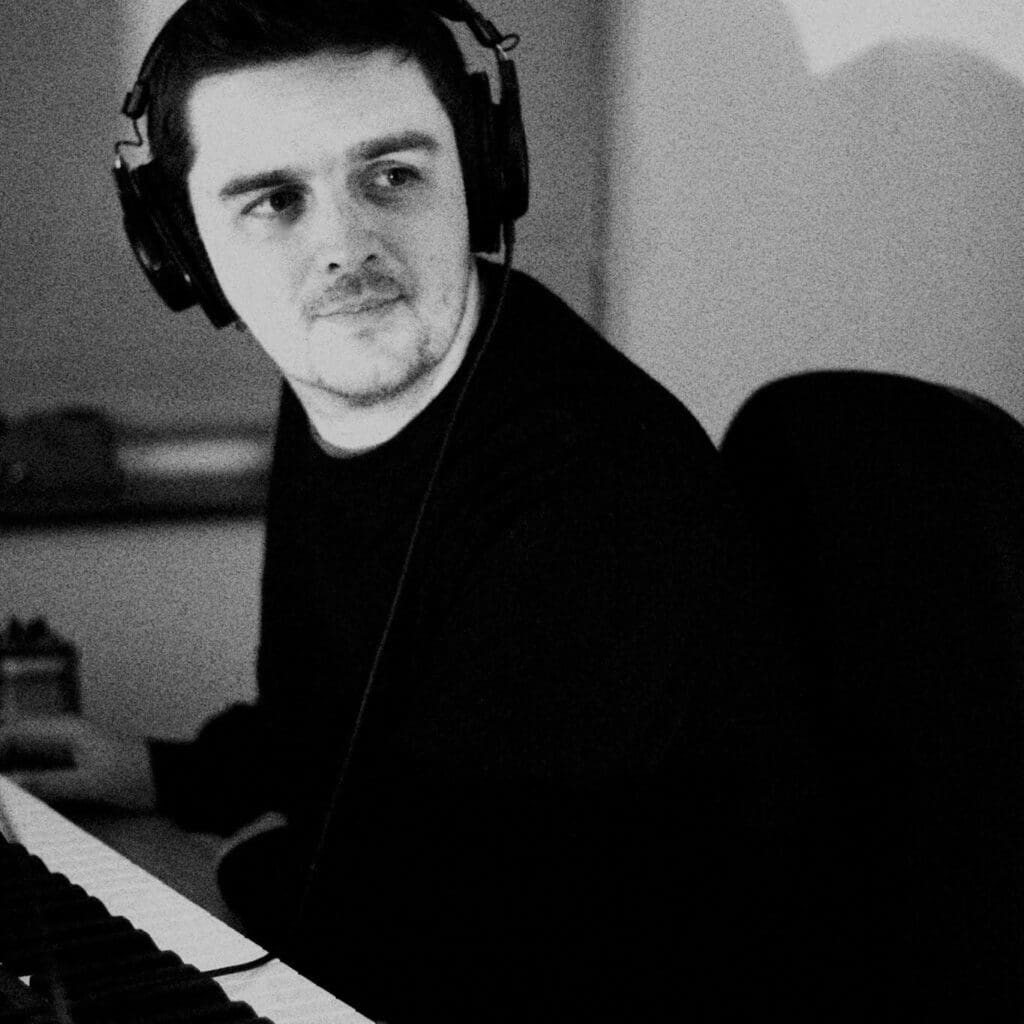
Working in the profession for almost 20 years, producing music for both solo artists and TV and film, Haynes admits that he was initially hesitant to use pitch correction when recording with singers. He, like some critics, felt it was a fake performance. It wasn’t until around eight years ago that one artist changed his perspective.
“She said quite rightly that everything about recording in a studio is fake,” he says. “When I put echo on someone’s vocals, that’s to make them sound like they’re somewhere else. And when I play a piano sample, it’s not a real piano.”
Now, if Haynes feels a few lines could be cleaned up when recording with an artist, he will experiment with some tuning on vocals. But it’s not only perfect pitch that makes a performance work, it’s everything that makes it human.
Haynes says: “A great vocal is the emotion, it’s the phrasing, and it’s the feel. It’s the actual timbre of someone’s voice.”
Willmott agrees that a great singer doesn’t usually require heavy tuning, unless they’re looking for a certain sound.
“I might do things where I would just choose one note that maybe is slightly pitchy, slightly too high, or slightly too low, and I would just edit that one in particular, so we still maintain the naturalness of it,” she says.
A SHORTCUT TO SUCCESS?
The discussions of whether or not an artist can sing often take place on social media, most notably in the comment sections of YouTube videos with titles such as ‘singers with autotune vs without’, where typically pop singers who utilise pitch correction such as Taylor Swift are analysed. These videos are raking in millions of views, so it’s clear audiences are curious about just how altered vocals are.
Autotune has been framed as a threat to authenticity in music, a shortcut to talent, and as Bryce Wallace says, even a “kind of boogeyman”.
“It’s not always a crutch for artists or performers, it can be a part of the sonic that they’re looking for. And what we’re used to now, after 25 plus years of auto-tune and pitch correction, is a certain sonic quality. So, artists can choose to play with that and work with that or work against that,” he says.
PERCEPTIONS IN POP AND RAP

The 2024 Glastonbury Festival saw criticism towards Charli XCX for using extreme autotune in her live set. The pop star made headlines for being labeled the ‘most disappointing set’ audiences had seen, according to Rolling Stone. Charli, real name Charlotte Aitchison, responded on X, saying “the best art is divisive and confrontational.”
To Willmott, the use of extreme autotune is part of Charli’s sonic, being “intentional to ruffle some feathers.”
“Her whole persona is being bratty and obnoxious. She is a great singer, but I don’t think brands herself as a powerhouse vocalist, that’s not her artistry.” she says.
“I think some people find it hard to understand that autotune can be used in this artistic way. They believe music should be a certain way, but the whole point is that these things are meant to be challenging.”
Similarly, many rap artists utilise heavy autotune as part of their sound. T-Pain is one of the most significant pioneers influencing rap with his heavy vocal effects. To Bryce Wallace, he is also one of the clearest cases against the ‘lack of talent’ statement.
“When T-Pain did his NPR (National Public Radio) Tiny Desk concert, everyone was amazed just how beautiful his voice was and how great of a singer he was. Someone who was so synonymous with autotune and automated pitch correction as an effect was just using it as a creative tool. He wasn’t using it as a necessity at all,” Bryce Wallace explains.
Gen-Z popstar Pink Pantheress is another artist whose Tiny Desk concert shocked the internet, with over two million views on YouTube, receiving praise in the comment section of the video for unique stripped-back performances of her usually heavily tuned songs.
Bryce Wallace says: “I think typically most artists and singers who rise to the top of the industry are exceptionally talented and very hardworking and they’re there because they offer something exceptional.”
IS THERE STILL A PLACE FOR AUTOTUNE IN THE FUTURE OF MUSIC?
“I think we’ve actually come a long way with auto-tune. Most people get it now. Nowadays people are like ‘that’s just one of those sounds that you hear on the radio a lot,’” Wilmott says.
Today, autotune-heavy tracks aren’t shy of topping the charts. British artists Pink Pantheress and Charli XCX are a testament to this, each receiving Mercury Prize nominations in recent years.
On the other hand, Haynes says: “I feel that at a time now where more and more you’ve got things like AI creating songs you need the humanity in music more than ever.”
Bryce Wallace shares this sentiment, saying, “I think nowadays people are trying to be more natural than anything. I think personally, there’s beauty in human imperfection and I tend to enjoy more the performances that are interesting rather than the ones that are perfect.”
Perhaps then, autotune isn’t taking the authenticity from music. It isn’t a shortcut for talent, nor a boogeyman to be feared.
While autotune may fade in and out of popularity, one thing is clear: it hasn’t replaced authenticity, it’s reminding us why it’s important. OA
Featured image via Ben Haynes

0 Comments