
From Neil Young taking on Geffen Records to A Day To Remember funding lawsuits with merch sales, we deep dive into the artists themselves, who risked everything to protect their music, their rights and their creative freedom.
The artist and the label, some believe the symbiotic relationship between the two are a necessity to succeed in the music industry, the artist gets what they want and the label gets what they want. However conflict between the two does occur, the artist wanting their art to be released as is to the world but the label is the business they are here to make money.
On December 1st, 1983, Geffen Records took legal action against Neil Young for not releasing music that was commercially viable. Young countersued for $21million as his contract stated that he had complete creative freedom. The suit monumentally backfired against Geffen, with label owner David Geffen personally apologising to Young for the inconvenience. And Young is not alone in this.
In late 2006 pop-punk band A Day To Remember signed to Victory Records, just a few months before their second studio album For Those Who Have Heart was released in January 2007. During their time signed to Victory Records, they released three more records Homesick (2009), Attack Of The Killer B-Sides (2010) and What Separates Me From You (2010). But it was after releasing Homesick something didn’t seem quite right, the royalty statements looked odd. Ticket scans and payout sheets no longer matched. Small questions turned into heated phone calls, then tense meetings with accountants. The numbers and the noise no longer matched, and that mismatch was about to drag A Day To Remember from the tour bus straight into a courtroom.
In 2010 while on tour the band huddled around a laptop, scrolling through row after row on a spreadsheet that would not balance. Ticket sales looked good and steady merch money flowed but the band’s bank balance kept shrinking. Within days urgent emails bounced between venues and polite questions turned into tense phone calls with Victory’s accounting desk. Lead vocalist Jeremy McKinnon looks back on this time: “Around the time we released What Separates Me From You we knew something was wrong, that record debuted in the top 15 on Billboard but it seemed to cost us money.
“So on April 11th, 2011 we filed a suit in Florida federal court. We asked for a full royalty audit, back pay for digital and merch sales, and the right to exit our recording contract after five albums instead of seven.”
Victory’s reply that same week was that the band still owed at least one more studio record and had no grounds to walk away. A Day To Remember could not walk away though they had to keep touring to pay their crew, themselves and now their lawyer. By spring 2012 the band had rented a cheap threebed suburban home in Orlando which became the makeshift recording studio for their next record Common Courtesy. Jeremy continues: “We realised that if we were going to pour our lives into this, we needed the record to sound exactly the way we wanted. Self-recorded, self-funded, and born under the shadow of a lawsuit.”
Common Courtesy was released independently. Victory Records hit back fast, filing an injunction to block the release but the court disagreed. In October 2013, a judge ruled the band could release the record with no interference from the label. Fans crashed the site trying to buy it. No label push, no radio support, just a loyal fan base slamming download like it was a middle finger to the industry. The lawsuit wasn’t over, but the moment was seismic. It showed that a band could go to war with its label, win a battle, and still keep the music alive.

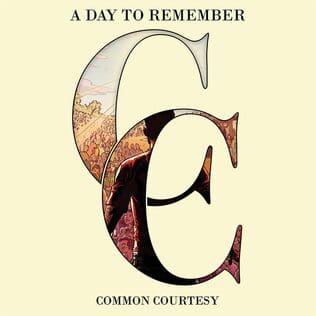
In early 2014 the band embarked on a European comeback tour off the back of Common Courtesy, with no promo budget, no label banners, just fans who knew every word of the self-released tracks. Jeremy continues: “Each night of that tour felt like proof of life for Common Courtesy, we had the biggest merch lines we had ever seen up to that point, funding court bills one t-shirt at a time.” Meanwhile the court case was stalled and pushed back but the longer the judge delayed, the louder the crowd sang.
Their sixth studio album Bad Vibrations dropped on September 2nd, 2016 through Epitaph Records, marking their first major distribution deal as owners of their own masters but their lawsuit with Victory Records still loomed. After almost 5 years of motions and postponed court dates, on November 23rd, 2016, a final settlement was signed. Victory Records paid $4million in withheld royalties from merchandise and digital sales and dropped all future claims, the band was granted the composition and publishing rights to their music, while Victory retained the master sound recording rights, allowing the label to continue selling their earlier albums.
After the court settlement A Day To Remember put out a simple one sentence statement, “Told you we’d end this on our terms”. Now looking back at that turbulent, stressful time Jeremy said: “At the end of the day, if the music speaks for itself, and we really put out an album that people care about, then none of this bullshit will matter.
“All that matters is the music.”
Artists of all sizes and genres have been affected by shady record label dealings, including British extreme metal band Dragged Into Sunlight. In November 2019 they announced that they had opted to end their relationship with their label, stating “We feel that the ethics and practices of (record label) no longer reflect what Dragged Into Sunlight is about.”
But what seemed like an amicable break at the time was hiding more under the surface. Lead vocalist ‘T’ explained: “Myself and other band members have had to take loans out for us to tour, costing us thousands. We decided to go through our finances and found that over the past 10 years the label paid us £927 just £92 per year. Not only that but we were getting spoken to like shit, our music was getting cheapened, we were getting demands barked at us with no communication from the label for months.
“We were also dealing with stocking issues, our fans couldn’t even get a hold of our vinyl and we appeared to be constantly in debt with handling fees for tour stock at thousands more than the actual cost. We tried to reason with them, we tried to explain the situation, we even hired lawyers but they didn’t even bother responding.
“The label has exploited us and others in the genre for years without repercussions, even refusing to pay for the artwork of Terminal Aggressor II. So as we said at the time a long time ago we wrote a song called “Buried With Leeches” and now we have one less leech.”

While Dragged Into Sunlight continue with their professional and musical endeavours they are not currently signed to a label and live shows can be far between. However they have recently played select dates at sold out venues, showing the high demand for such a ferociously heavy underground band.
Even The Beatles didn’t have an easy time with their labels. In the late 70’s, after the group had been disbanded for nearly a decade, a ten year long lawsuit would ensue. The band were seeking unpaid royalties from EMI to the tune of $50million, escalating to $80million after the group’s music was attached to promotional campaigns with Heineken and Nike through EMI. A settlement was reached in 1989, though whether the group attained the full amount still remains unknown. RW
Featured image: Neil Young image via Stoned59, Photographer: F. Antolín Hernandez, CC BY 2.0 https://creativecommons.org/licenses/by/2.0 via Wikimedia Commons/ A Day To Remember image courtesy of A Day To Remember

0 Comments