
Video killed the radio star, but did streaming kill the music video? Videographer Joe Gist, Creative Director of indie production house Blink Vivid, sits down with Isobel O’Mahony to break down the makings of a music video, the bands he’s loved working with, and how independent creatives are surviving the age of the algorithm.
It’s August 1st, 1987, and people with the luxury of satellite television are about to witness the UK music industry forever change. Gathered around their boxy telly sets, they take a seat as new channel MTV Europe fills the screen. Dire Straits’ wacky, graphics-pioneering ‘Money For Nothing’ is first to be featured, the 80s hit kickstarting the American networks popularity from across the pond. A dedicated MTV UK launched in 1997, becoming one of the biggest channels in the country and propelling now beloved artists like Coldplay, Jamiroquai and The Verve.
However, on 31st December 2025, the music stopped. MTV shut down their UK channels, with years of declining viewership igniting a stark turning point in the industry. By 2024, their channels averaged 1000 monthly viewers, a harsh drop from the millions watching at their peak.
Thirty years on from that first video, now flat screen TV’s often sit quiet, replaced by the metal square in our pockets serving every song on demand. Streaming services like YouTube and Spotify displaced the music channel, but producers are adapting and remain confident the art form will endure.
Director and videographer Joe Gist has a pretty impressive rolodex, working with chart toppers like Jamie Webster and The Lathums, and filming festival favourites Rock and Roll Circus and Live At Leeds. In 2017, he founded Sheffield-based production company Blink Vivid, alongside university friends Will Wade and Aiden Joseph.
Now armed with a diverse, award-winning portfolio of corporate, documentary and music video content, the team’s reputation keeps artists coming, trusting them to bring their stories to life.
“We’ve got enough work or people see enough ideas to bring an idea to us, so then we’ll just flesh it out from there. Or it can be the opposite where people just come and go, ‘here’s a song, can you picture something’?
“There’s things I like doing but we also try and challenge ourselves; we pride ourselves really on being a creative company.
“One thing we’re always figuring out is how everything changes. When we first started out it was just something we wanted to do because it was fun.
“People can just pick up a camera and shoot something that’s decent quality these days. The thing that we feel sets us apart is the concepts, the ideas and the love of experimenting.”
In 2024, video editing company Kapwing reported 21-33% of YouTube content could be classified as ‘AI slop’. A survey conducted by YouTube themselves, however, found that 89% of users believe AI tools “level the playing field” between independent creators and big-budget studios.
Joe says “you can’t blame people”, as the economic returns from making videos continue to shrink whilst creative ambition grows.
“It’s hard, so many people are against AI but also feel like they’ve got no other option because it’s the most convenient tool to get things out there.
“If tomorrow I decided I wanted to be a musician and made an EP, I won’t be able to afford to get a music video made. So then what do you do? You go generate something, and that’s why TikTok and things like that are so big because people just shoot themselves on phones.
“The thing that’s really tricky is there’s not as much of a clear monetary value to music videos these days, but people know that they’re worth making.
“Say I’ve worked on a music video, and I really wanted to work on it, I could have made literally no money. The artist is out of pocket by more than they should be, and we’re doing all that so they look great.
“In some ways, that’s a double-edged sword because that promotes the song, which is what you want, but creates the image that the artist is doing well. Then when they do an interview and go ‘I don’t make any money’, people naturally look at a flashy music video and go, ‘well I think you do alright’.
“Especially with social media, people are selling the dream, aren’t they?
“It’s a hard time for it. There’ve been so many projects we just couldn’t do because it wasn’t feasible, and these aren’t always nothing artists.
“After a few years, there was the question of is this going to be viable to do? And to be honest, it’s not been entirely.
“These days, people who are very passionate about creativity are having to be the most heightened example of it because it’s so discouraging.
“If it was a bit easier, a lot more people would do it but, sadly, it just requires more and more drive at the moment because the odds are stacked against you.”
Yet as technology evolves, new opportunities open up for companies like Blink Vivid, most notably the recent introduction of music videos to streaming giant Spotify. Available across mobile, smart TVs, and desktop, the feature allows users to switch from static cover art to the music video, putting music videos in front of more eyes than ever.
“It’s probably more of an argument than ever to make music videos in a weird way because everyone’s got their own music channel in their pocket now.
“I’m optimistic because we consume so much. I feel video is more engaging than just listening to the song, so maybe the pendulum is swinging the other way.
“When we make the videos, I just want them to be something that people can experience and go hand in hand with the song as much as possible, really.”
Whilst Joe has worked with multiple household names in the UK music scene, the projects that really stick are more about the visuals itself; the wackier the idea, the better.
“We shot a video for a band called BDRMM that I co-directed with my brother. I’m really proud of that video because that was just very weird. That’s an example where the band came to us and said, ‘we want to do a teleshopping channel’.
“Obviously, I was not thinking of a teleshopping channel because you’re not coming in on Monday morning with that in your head, but that was actually really exciting.
“We just did a music video for a band called Autumn Fires and it was like a pop-punk kind of love song. We did this handmade animation video, and we sketched every frame and coloured it all in, wanting to create this almost like doodling in your book at school vibe.
“I’m also really proud of the ‘Black Wax’ video from The Subways. That was a great couple of days, and all the elements came together to create something weird and different. It was a really fun shoot, a bit stressful because we were underneath the knife to get everything done in time, but the team worked really well.
“You can work for a bigger artist and actually the job is not as rewarding. Maybe you were a smaller part in it or didn’t have as much creative control because it was already set up for you.
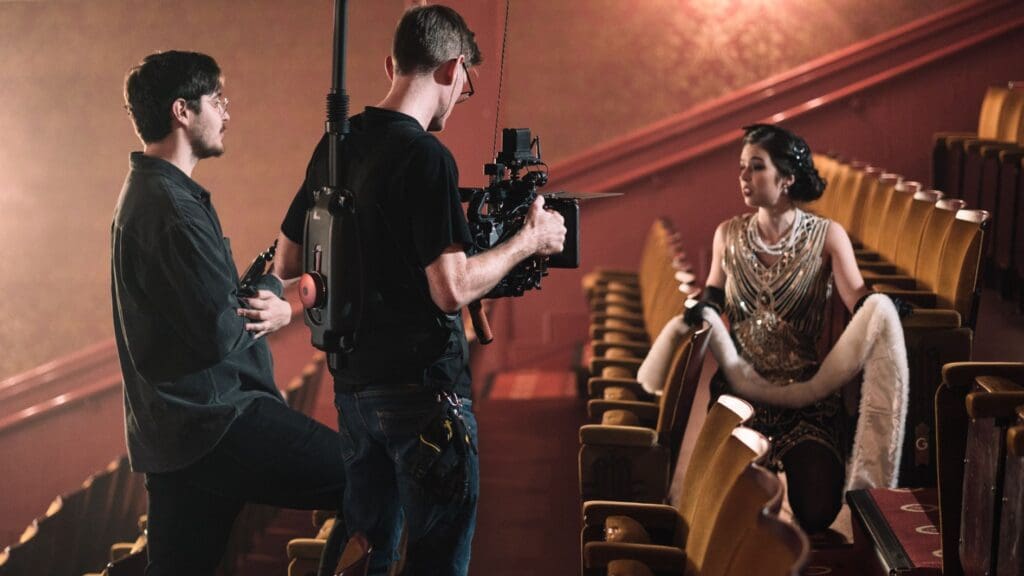
“For me, if an idea is cool then that’s the thing I’m thinking about the most. For Jamie Webster and The Lathums it was more stripped back, like a live session in a studio which was nice; we really enjoyed that.”
Aside from great ideas, nostalgia is a big reason why music videos persist. Michael Jackson’s ‘Thriller’, has amassed over 1 billion views on Youtube since being uploaded in 2009, despite releasing decades before the platform was launched. Artists pay homage to iconic videos, such as Dua Lipa’s reworking of Olivia Newton John’s visuals for track ‘Physical’.
Videos spark memories of music channels past, carry notes from childhood and a sentimentality that Joe goes beyond the music itself: “We can take you back. The song can take you somewhere, but we can take you back.
“I still do, but I used to love The Killers and remember every time a video came out, I was obsessed with watching it. The other day I put them on shuffle and was like oh my god I remember all of these.
“Obviously I’m passionate about it because I make them, but it’s such a wild thing to imagine not having them entirely.
“I always think, imagine no song having a music video. In today’s day and age, you need to sell it somewhere, show it to people. Showing audio is harder than showing a picture or a video.
“I feel like it’ll always be there, even if it’s changing its shape all the time.”
Whilst MTV may soon be considered ‘vintage’, and Dire Straits’ once ground-breaking graphics begin to become laughable aside easily generated AI content, the music video is far from dead.
Joe and his work with Blink Vivid are clear examples that human drive and imagination cannot and should not be replicated, and instead be greatly encouraged to fight against economic pressures and empower artists. The age of visual content is here, and the future still looks bright for the video star. IOM
Featured image: Courtesy of Joe Gist/Blink Vivid

0 Comments