
From rave pioneers, to algorithmic producers, a lot has changed in the electronic music scene in the last 30 years. From different corners of the industry, two professionals share their insight into how they built their fame, how they remain in the scene, and how saying ‘I don’t know anything about computers’ is no longer acceptable.
In the electronic music scene, it used to be that people stuck to their roles- a producer was a producer, a technician was a technician, and so on. In the modern industry, the same ‘behind the scenes’ world has transformed into something broader. Producers can now be editors, content creators, and technicians; studios exist as much on social media as they do in physical spaces; and the skills that once demanded years to learn are now often replaced by algorithms.
Success still looks like a song on Top of the Pops, a packed rave and a pressed vinyl, but is now harder to define. For the people behind that success, the reality was far less visible, and far more painstaking. Long before tutorials and sample packs, producers like Mark Franklin built songs through trial and error, instinct, and love. They helped shape and create a live dance music culture that didn’t yet have a blueprint.
Through the experiences of Mark, a rave scene pioneer who has now turned to studio life, and Nick, an innovator (now director of a website and podcast) navigating today’s music media landscape, a different story of electronic music emerges. It’s still about what we hear, but also about how it’s made, who makes it, and what might be disappearing in the process.
For Nick Batt, a creative who started as a sort of bedroom DJ, he said he has become the whole package. “I’m not a producer, not a presenter, not an editor- it’s just me. I do all those things.”
Nick’s career has evolved into something more hybrid: part musician, part media figure, and part technician, all skills underpinning the modern music industry.
Mark Franklin, self-declared ‘music man at the back’ (alongside NJOI band partner Nigel Champion), helped create the rave scene that we see today. “I’m not really a DJ or a performer now- I am a producer,” Mark said.
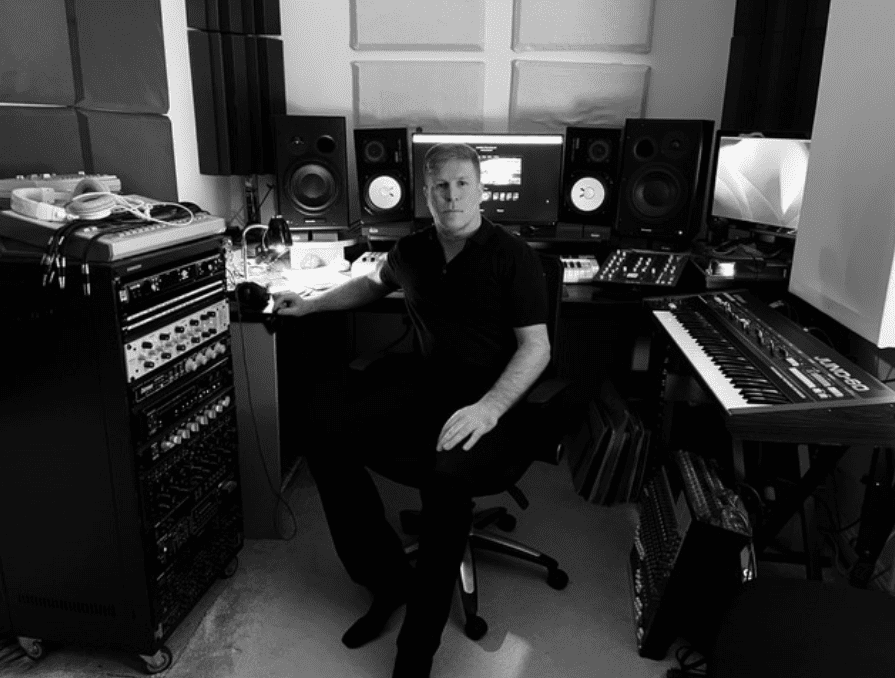
While the rise of ‘superstar’ DJs has shaped public perception of dance music, Mark reflects a different reality, one that started with composition and studio work, rather than just performance. Even at the potential height of his career in the early ’90s, playing huge shows and appearing on national television, his identity remained tied to what was happening behind the scenes.
For Mark, there was no established pathway into dance music and no clear sense of what the scene might become. His musical journey started with learning piano as a child, picking up guitar at school, inspired by the desire to be in a band. “It was the only thing I was ever interested in.”
By the end of the 1980s, he had shifted into something less conventional. With Nigel Champion, he formed the band NJOI in his twenties, stepping into a space that barely existed. This was live electronic music, specifically designed for rave environments. In the ‘90s, this was close to a musical invention. “We were one of the first live techno/house outfits, and one of the first live dance acts”
Alongside acts like 808 State and Adamski, they were helping define what a live electronic act could look like before it became the standard.
The scene escalated quickly. Top 40 hits, international touring (throughout the UK, US, Europe, Scotland and Australia), and appearances on Top of the Pops arrived within a few years.
“You had made it if you were on Top of the Pops,” Mark said. “That was the pinnacle at the time.”
NJOI played to a crowd of 10,000 alongside 808 state and Bjork at the G-Mex Centre in Manchester. In Liverpool, crowds ‘hung off the rafters’ at Liverpool’s famous Quadrant Park. These were parts of the rave scene still working out its own scale and identity. “We weren’t playing in pubs, we were playing at raves,” Mark said, describing how untraditional his role felt at the time.
“The Prodigy used to come and watch us live,” Mark recounted. “I remember seeing them in the crowd. Then they formed their own band.”
Mark, and therefore NJOI, are considered a precursor to acts like ‘The Prodigy’ and ‘The Chemical Brothers’. They weren’t following any templates or guidance, just a growing audience and love for the music.
Nick had a relatively similar beginning. He said he was “just a young man in a bedroom studio with a couple of synthesizers and a drum machine, just messing about.”
The bedroom producer can often be the starting point for countless careers. In Nick’s case, it wasn’t a route to becoming a DJ in the traditional sense. Instead, it led to remix work, collaborations, and eventually a job that blends production, media, and the technical side of the industry. He connected with a local DJ, started collaborating, and moved into remix work, including tracks that would go on to have lasting cultural impact.
Nick also worked on a song featured on Top of the Pops. He was a part of a successful duo named DNA, and in 1992, their song (featuring Sharon Redd) made it to an episode.
However, for both Nick and Mark, they have chosen to remain ‘behind the scenes’. For Mark, after years of touring internationally, and playing to crowds of up to 20,000, his focus has returned to the studio. His own studio. “Being a ‘studio guy’ and producer is where I am happy now.”
In a way, the studio has become his stage.
For Nick, the studio has become his workplace. He is the director of Sonic State, an influential website and podcast in the music tech world, that primarily reviews gear*. Where producers once operated out of sight, their processes are now part of a stream of content that is watched and shared within the music tech community. He said he can just “stand in front of a camera and talk”.
Nick also said how music production has shifted from projects to continuous output, and content. “Back in those days, a record label would send you something and say, ‘can you make a dance version?’”
This meant a remix of a song an artist had potentially previously published. An example of this is a remix of the song ‘Tom’s Diner’ by Suzanne Vega. It went viral on TikTok. Remixing in this form can be a way of extending a song’s reach into different contexts. It could also still have a personal touch, as Nick said receiving voicemails from Suzanne Vega was an exciting point in his career.
Nick also worked with the critically acclaimed band Goldfrappe (known for popular songs such as ‘Ooh La La’, and ‘Strict Machine’), and has writing credits for a number of their songs. He collaborated with them on their first four albums.
Goldfrappe are cinematic musicians, and Nick agreed with the point that electronic music can be a visual experience. “Music conveys sensations and feelings. It’s a way of making sense of things. If you can’t explain what’s happening in music, you can feel it.”
The remix model has dissolved in the modern industry to some extent. Songs and albums now no longer focus on solely the charts, but how they circulate. Like ‘Tom’s Diner’, a song might find ‘new life’ years later following a social media trend.
Nick also pointed out, the modern artist can’t afford to be “monofocused” anymore. The essential skills in musical success have become technical fluency, communication skills and economic understanding, of course alongside creativity.
Musicians must now possess all these skills. However, this means the ‘behind the scenes’ roles haven’t necessarily disappeared, they have multiplied. For Mark, he became skilled in writing for film and television. He humorously said: “Sometimes I hear music on the television, recognise it, and realise it’s one of mine.”
Nick agreed the role of ‘making it big’ has changed in the modern electronic scene. “Traditional artists have changed enormously. They need to make revenue from lots of different places, and be able to perform, and be technically adept.
Saying ‘I don’t know anything about computers’ is no longer acceptable.”
There is a common concern of technology, often specifically AI generated work, that it is removing skill and creativity from the industry. However, Nick suggested this follows a pattern that technology has always provoked anxiety, and that we should work with it, not against it.
He argued there used to be fears about cassettes ‘killing music’ and scepticism around drum machines and synthesizers. In many cases, those tools went on to define entire genres. Famous sounds of acid house, hip-hop and electronic music were never intended to be used in that way.**
Nick said: “People misuse music technology wrong creatively, and create something exciting”.
For Mark, the development of technology has brought a sense that something essential is being lost. “A lot of DJs and producers are just after fame,” he said. “People can press a button and get what they want without any skills, I think the human part of it is starting to be lost.”
Mark also sees a shift in the scene, as it becomes more corporate and money focused. He said that although the music business can bring ‘ups and downs’, he is always learning and improving.
Nick also said the scene has changed, but fundamentally: “Creativity is a basic human necessity. It has become easier to make music, but not better.”
Overall, the tools and roles in the electronic music industry have evolved and developed, but as long as we have creativity we will have music, and a dance scene. RB
Featured image via Martin Vorel via LibreShot
*Sonic State is an online media publisher and news network focused on music technology, electronic instruments, and production gear. Founded in 1995, it is considered one of the top online destinations for electronic musicians. On YouTube they have over 260,000 subscribers, and over 22,000 followers on Instagram.
**The Roland TB-303 is a bass synthesiser, released in 1981. It is now synonymous with acid house, and was originally designed as an accompaniment tool. The TR-808 is an analog drum machine, released between 1980-1983. It is foundational to hip-hop and electronic music, and was never meant to be used the way it is now.

0 Comments