
A sound engineer, a touring guitar tech and an independent venue manager share the realities of life backstage — from gruelling schedules and dangerous gigs to the moments that make it all worthwhile.
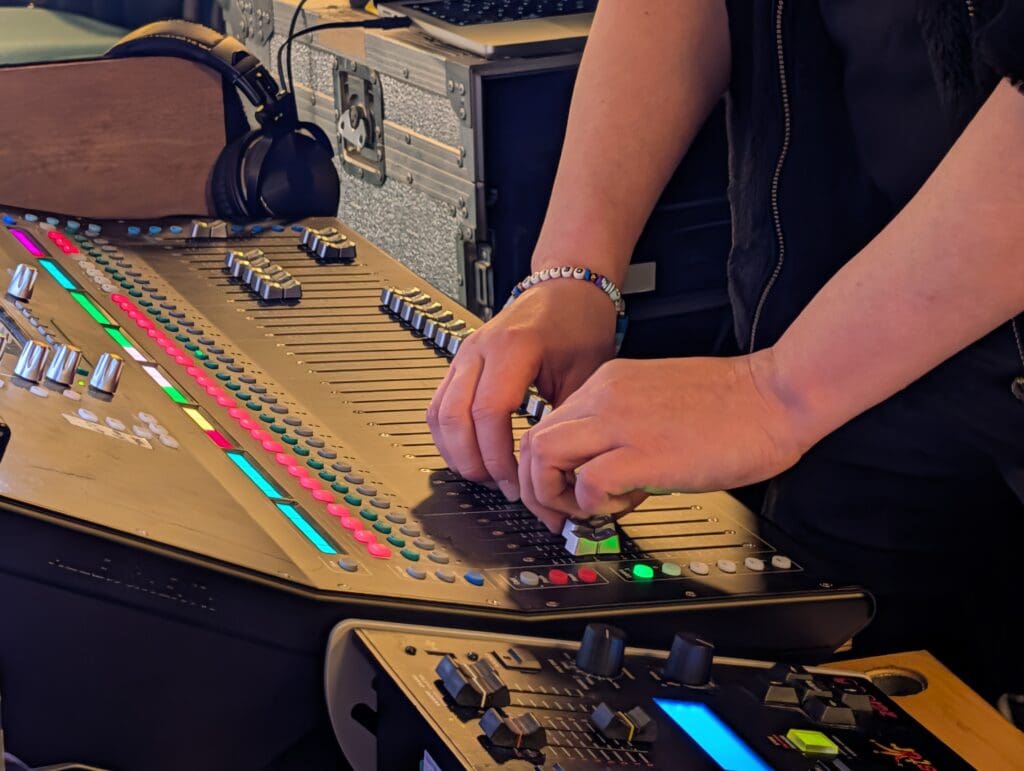
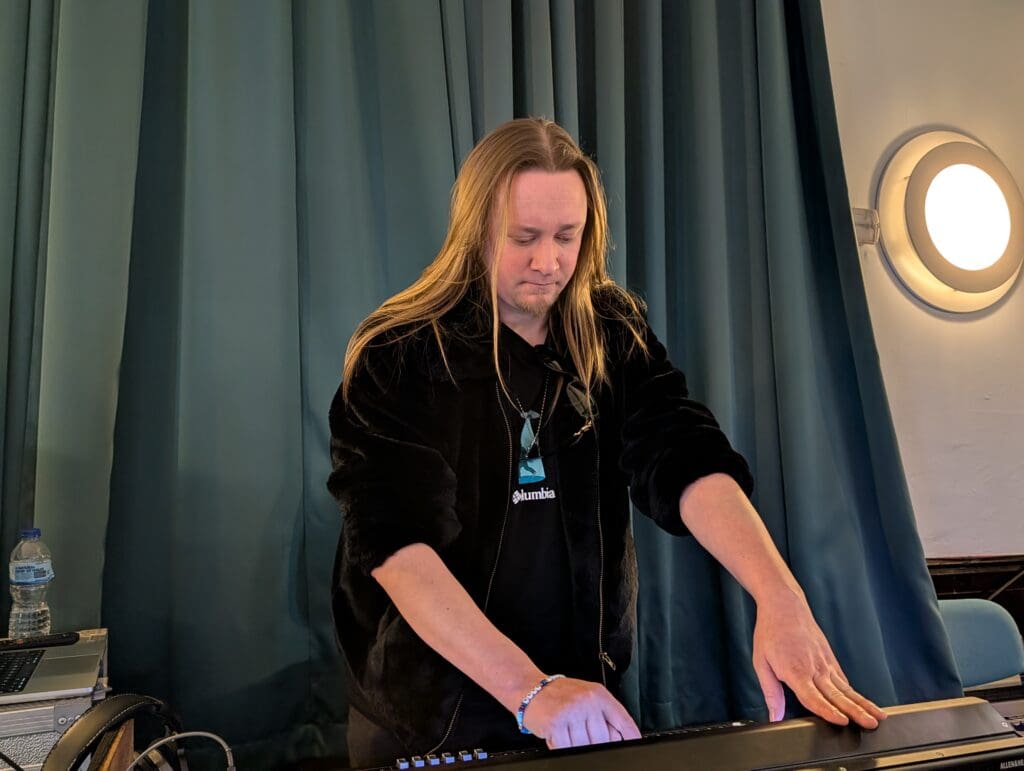
We begin with Jake Hepworth, a live sound engineer from Bently, Doncaster. Jake has been in the industry for 12 years which has granted him the opportunity to work both in the studio and at live venues but as Jake puts it live music is where his calling is : “I originally wanted to go into the music business as a producer.
“But I quickly learnt that being on the production side of things was actually a much more laborious task, it felt like doing surgery like you do one thing wrong and you just ruin the mix.”
For Jake this love of live music engineering began at University where he studied music production. “We had a module on live sound and we had exams for it and everything, and it just became clearer and clearer that the thing I was enjoying the most was the live sound aspect.”
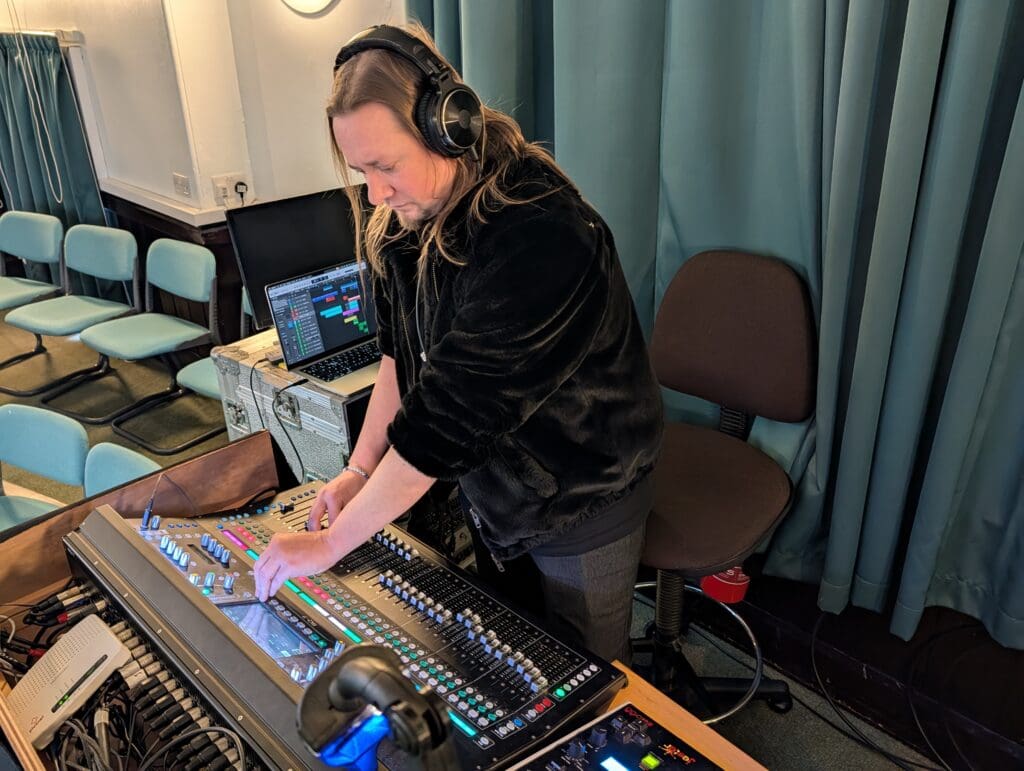
Now Jake splits his time between three venues as well as working a day job. Selby Town Hall, Howden Live and The Junction all have him as their in-house sound engineer but Jake did not start at these venues. “I started off in Doncaster where I had my first gig and they hired me there as the sound technician for about a year.
“After that the bassist in my band was a sound engineer in Sheffield already and he said that he could get me a job in Sheffield. So after I graduated, I moved to Sheffield and I started off there. I was freelance at first and when I was booked for jobs I used to take a sound desk, microphones and leads all in a black cab to every gig because at the time I did not drive.
“So I saw everything from like, starting in real sort of dive bars working 3 nights a week at £50 a gig which at the time was money I just could not turn down and then getting up to more professional stuff like this setting that we’re in today (Selby Town Hall).”
It’s in those early days that Jake learnt a very valuable lesson to listen to the bands before committing to a gig.
“I was booked at this venue in Sheffield and I already had heard rumors about some of the bar staff being a questionable outfit, but to me it was just a gig and I was really desperate for the money so I told myself I’m going to do my job and leave as soon as I could.”
As people started turning up something felt very uncomfortable about the gig. “I had worked heavy metal gigs, punk gigs and progressive rock gigs at that point but something just felt different, as the first band took to the stage I realised my error it was a neo-nazi punk night and I did not want to be there but I was heavily out numbered so I kept my head down finished the night and never went back.”
Now Jake says he does listen to the artists before but not only to avoid another instance of that happening again but to make sure the artists sound their best in the venues. “Sometimes I get a technical specification sent through that is not thorough enough. So I’ll check the band out, I’ll check out some videos and then I’ve got a more general idea of what their requirements are going to be, because I want them to sound their best for the audience as well as themselves.
“Which creates such an amazing atmosphere in the venues I work in, if I was in a studio no one really says thank you that much but with live music even though I’m only a sound engineer everyone is appreciative and has a great time which is what this is all about for me.”
Robb Philpotts is a touring guitar technician who has also dabbled in bass and drum tech as well as tour management. Some of the artists that Robb has worked with include Slayer, Judas Priest, Enter Shikari, My Dying Bride, Saxon and many more. Similar to Jake, Robb’s introduction into the music industry began with a friend asking him if he would like to drum tech for their band and of course Robb accepted.
Due to a combination of Robb’s work ethic, attitude and friendly personality he has now built a portfolio of some of the biggest names in heavy metal under his belt. “People think I must be living the high life, touring the world and occasionally doing shows but it’s not like that. Don’t get me wrong 90% of the places I’ve been are because of music and touring with bands but it’s not a holiday.
“Usually my day starts at 7am and finishes at midnight before we move onto the next town or city. I do get rest days in between some but not all of the shows.”
Over the past year Robb has worked on some of the biggest stages from touring with Saxon, Black Country Communion and Slayer to the biggest show of last year Black Sabbath: Back To The Beginning.
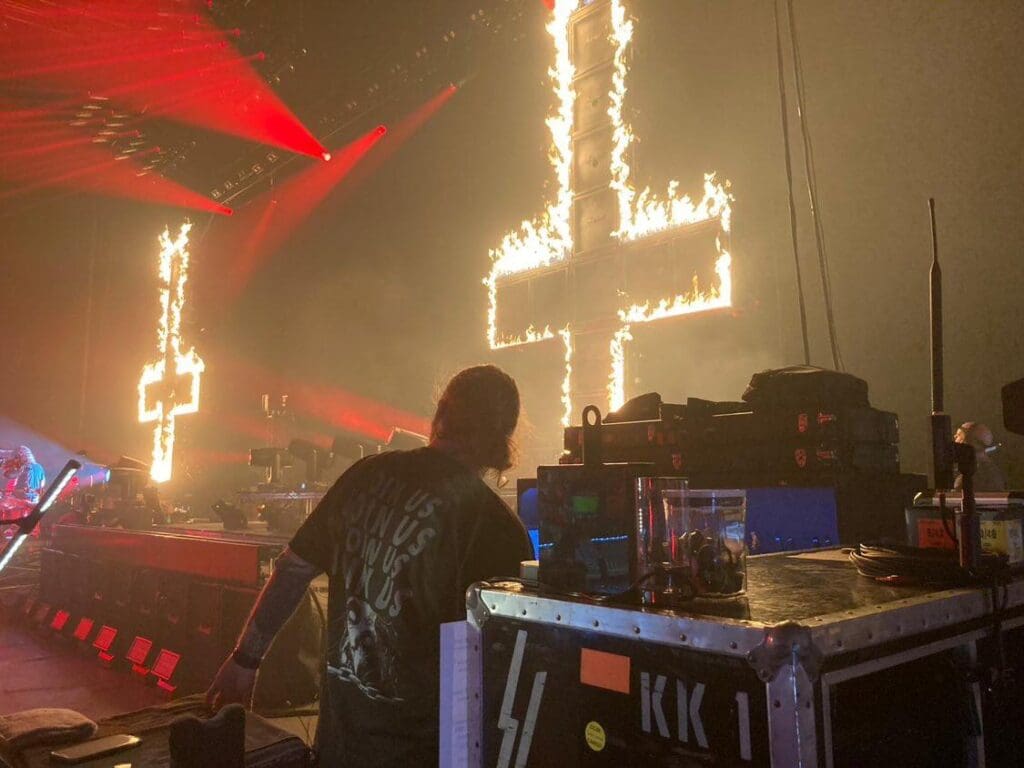
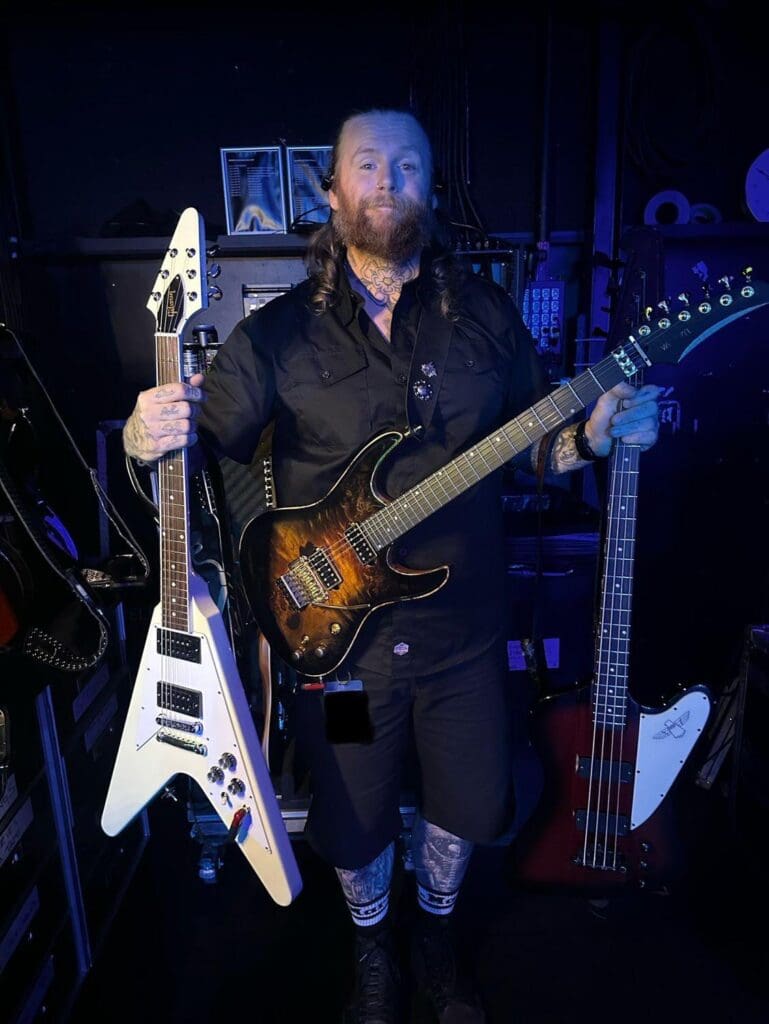
“I always try to take something away from every show that I do but one of the biggest standout in recent times was the Back To The Beginning show at Villa Park. I had already been approached by Slayer’s management to guitar tech for Kerry King so that was already lined up then Back To The Beginning was announced with Slayer as one the acts.
“That was definitely one for the memory bank not only for it being Ozzy Osbourne and Black Sabbath’s last ever show but how well it was put together and how quickly and efficiently stage change overs were and of course everywhere you looked backstage there was rock and roll royalty.”
While on tour and rubbing shoulders with some big names in the industry Robb has seen everything well almost everything backstage.
“I don’t think I’ve witnessed anything too crazy backstage, just the normal drink and drugs. Well maybe it’s not that normal but certainly nothing like Motley Crue-esque. I’ve just always kept my head down and worked and occasionally when I do drink it’s just in moderation.
“I used to drink quite a bit after work but I found myself not enjoying the work when really there are a million people out there who would love to be in my position and I love my job, I’m too old to be working with a hangover now.”
But before artists take to the huge stages Robb is accustomed to working on they have to start somewhere, take Yellow Arch Studios in Sheffield for example a small 200 capacity independent venue founded in 1997 situated on the edge of Kelham Island. Russ Frisby is the production manager for Yellow Arch.
“I handle the booking, promotion and production of shows that are put on here at Yellow Arch. For the production side of the shows I set up the stage and equipment for bands and also help with load in and load out.
“As we are a small independent venue we do rely on everyone that works here picking up multiple job roles whether that’s helping with sound check, set up or loading in or out as well as working on the bar, no one has just one job we all chip in and help out.”
But as Russ puts it the production of the shows is only half of the battle with running a small venue: “As we are such a small venue we rely quite heavily on putting on exciting shows with a variety of artists, but I can book as many acts as I like, what we really makes this venue and the shows so special is the audience members that will buy a ticket and turn up and have a brilliant time, which is what we want.
“We are quite fortunate that we have built somewhere that is known for really great quality shows and that people will come here as we are not necessarily in a prime location.”
The success of Yellow Arch is not only down to the live venue but also the connecting recording studio which has produced records for a variety of artists such as Kylie Minogue, Arctic Monkeys, Richard Hawley, Jarvis Cocker and Reverend and The Makers amongst many others, this commitment to in-studio and live music has ensured Yellow Arch’s legacy and commitment to the Sheffield music scene. RW
Featured image via Robb Philpotts

0 Comments