
When your family’s history involved producing for the Police, Siouxsie and The Banshees and Godley & Creme, continuing a career in music seems inevitable. Not only is he following in his father’s footsteps by recording songs, but Tom Gray is carving his own path in music by building the instruments that produce the melodies themselves – in particular, guitars.
Tom Gray is the son of celebrated producer Nigel Gray, the developer behind the first three hit records by the Police, and Siouxsie and The Banshees’ influential post-punk record ‘Juju’. His work was an inspiration to Tom, as well as the rest of the world- including the alternative ‘NG’-initialled producer, Nigel Godrich of Radiohead. But by the late ’80s, Nigel was ready for a change.
“He was sitting in rooms with bands who’d got a record deal because one half of their song was quite good, and told ‘Nigel will make it sound amazing’,” Tom says. “He wasn’t attached to a label, he didn’t have a manager, and I think he essentially was getting a bit bored of it.” Tom says.
Nigel sold the legendary Surrey Sound Studios he’d established with his brother Chris, and in 1987, the family moved down to Cornwall. He picked up medical work again, but his love of recording hadn’t been forgotten. Music had moved along with them.
A small studio was built next to their house where Nigel would record other minor tracks, and where Tom would eventually learn the ropes himself. He began to explore his own path in music, learning to play guitar and write his own songs.
He has recorded music for twenty years now with the studio equipment in his home, including for his daughter’s boyfriend’s band. “The way my dad worked has definitely rubbed off on me, keeping things simple and not overcomplicated.”
He likens recording to going fishing: “You just put the rods out and then you see what you catch. You get back and you push play. And I love that.
“I enjoy mixing music as well; it’s like problem solving. I love that it’s like a Rubik’s Cube.”
Recording laid the foundations for Tom’s journey into guitar building, but it wasn’t an initial decision. For many years, he’d been a schoolteacher, which he recognised wasn’t his main passion. His enjoyment came from teaching music to students, and in particular when he began teaching BTEC music technology three days a week. With the option to choose two of the modules for the course, one of these was backline technical management, which is “looking after instruments for a band, like a roadie but a step up from that”.
“I looked down the syllabus and there were all these things I had to learn, one of them being setting up a guitar perfectly. I had played guitar forever, but I didn’t know exactly how to do these things.”.
In the school’s woodworking department which “had every machine you could ever need to make anything”, Tom was shown how to make minor modifications to guitars. After many trips to Wicks to buy cheap wood pieces and becoming engrossed in YouTube tutorials on shaping guitar necks, Tom finally mastered the skills enough to create his very first guitar which he gifted to his dad, complete with ‘NJG001’ engraved on the back.
YouTube channel ‘Fletcher Handcrafted Guitars’ had become Tom’s muse. “He’d glue something together and at the end of the video he’d say, ‘I’ll come back and check that in the morning.’ And I thought ‘imagine going to bed knowing the next day all you’re going to do is have a cup of tea and walk into your workshop, that sounds way better than being a schoolteacher!”
When Tom wasn’t teaching music, he was “beavering away”, and his custom guitar orders were building up. “When I first started making guitars, I thought a really good idea would be to get guitars into famous people’s hands that I know.” And Lol Creme of 10cc, a friend of his dad’s, was the first of many.
“It got to the day when I went to go and see Stephen Street in his studio, and I took a guitar with me hoping he’d buy it. And he fucking did.”
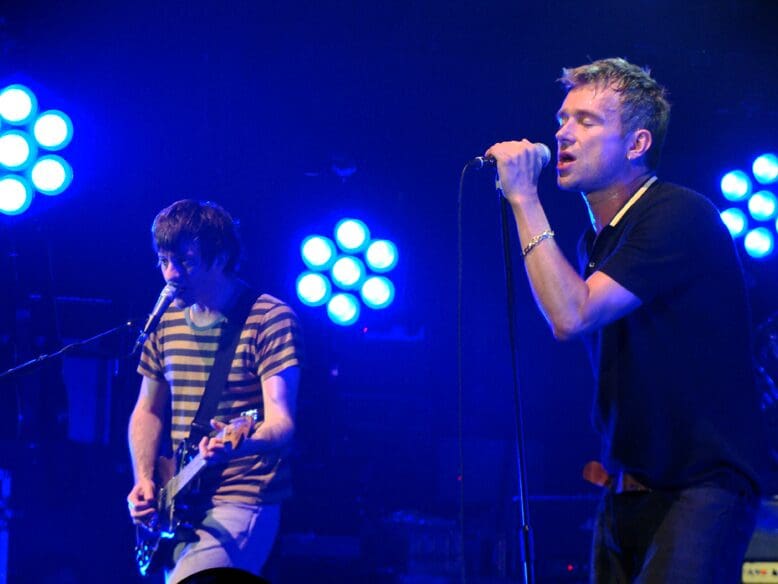
Not only did Street buy a guitar, but Tom’s favourite guitarist of all time did too: Graham Coxon of Blur. And a simple tweet to Coxon made it happen. “There was no response for two months. Absolute dust balls,” Tom says. “And then I was leaving the house to go to my daughter’s carol concert ten years ago, and I looked at my phone beeping. It was Graham Coxon saying, ‘Is that guitar really for me?’”
Building guitars and building records are very different processes, but the parallels between the lives of Nigel and his son are profound. “I started making guitars when my third daughter was just born, a bit like my dad opening the studio when we were tiny.
“Whenever my dad’s mentioned, you always see his name in brackets for The Police or The Banshees. And I thought if I can have that with someone’s guitar, like Graham Coxon, I’ll have one foot in the door. I ended up making some guitars for some prominent people and being pretty successful at it, kind of like my dad.”
Twelve years later, Tom is running the successful business Gray Guitars. And it doesn’t come without its difficulties, including the challenges of working with ADHD. “I have made every single mistake at the worst possible moment you could ever think of,” he admits. “I make guitars now with a CNC machine, a computer controlled magic cutting machine. Everything I’ve fucked up before, I’ve now built in, so I can’t do that again.”
As Tom describes, it’s a meticulous step-by-step process. “There are one hundred things in a row. And the thing is, if you mess up step seven, eight, nine, ten… it gets worse and worse until it’s at the point to throw it away. So you have to have consistency and everything right, or you end up with something which isn’t straight.”
They are made in batches of three or four, and having made so many different guitars, it’s hard for him to pick just one favourite. But there are models which have been incredibly special to make. “A guy came into my old studio to design a memorial guitar for his girlfriend who had terminal cancer. She unfortunately lost her battle, and the guitar has become one of the most cosmetically involved and ornate guitars I’ve ever made, with a sunflower inlay on the fretboard and petals falling from it.”
“Some guitars are a bit more involved and take longer, and some are completely effortless, and I forget I make them until I see them somewhere with my logo on.”
His buyers come from all over the world, most recently being America and Ireland. “When two people call you from two different countries within a week and say they’re willing to pay me all this money, that makes me feel pretty good.
“They’ve never played one. They’ve never held one in their hands. They just base it on what they’ve seen or heard.”
Tom Gray is all too familiar with the concept of unsung heroes, and not only because his father was one, going uncredited until the second Police record as a co-producer.
“I know loads of really talented people who, through good manners and being English and not asking for things, have really fallen by the wayside.”
Tom’s best friend Martin is one of them. “Much to his wife’s annoyance, he never piped up and said he wrote some riffs for Dido. And that’s what happens in the music business,” Tom says. “You’re in a session with people; it’s all going great and you’re just happy to be there earning money for the second you’re in there.
“After the excitement’s passed and six months has passed, and a year has passed, you realise ‘I should have got a percentage of that’.”
In terms of building instruments, Tom finds that he can relate to the sentiment. “When Graham walks on to Wembley Stadium with the guitar made for him, no one knows me. Maybe three people I know are like, ‘oh, that’s the guitar Gray Guitar’s made.’ The other ninety-seven thousand people are just going ‘Parklife!’”
Making guitars has saw Tom becoming acquainted with people extensively involved in the music world. He attended a party for producers one year in East London and was introduced to people who make crucial equipment like pedals and amps.
“When people found out who I was, I was surrounded by maybe twenty 50-year-olds,a bit older than me, who all thought the same thing as me. ‘Why hasn’t Nigel Gray been championed more? Why isn’t his name mentioned in the same sentence as Steve Lillywhite and those big 80s guys? His records were so important’. And it was nice to hear.”
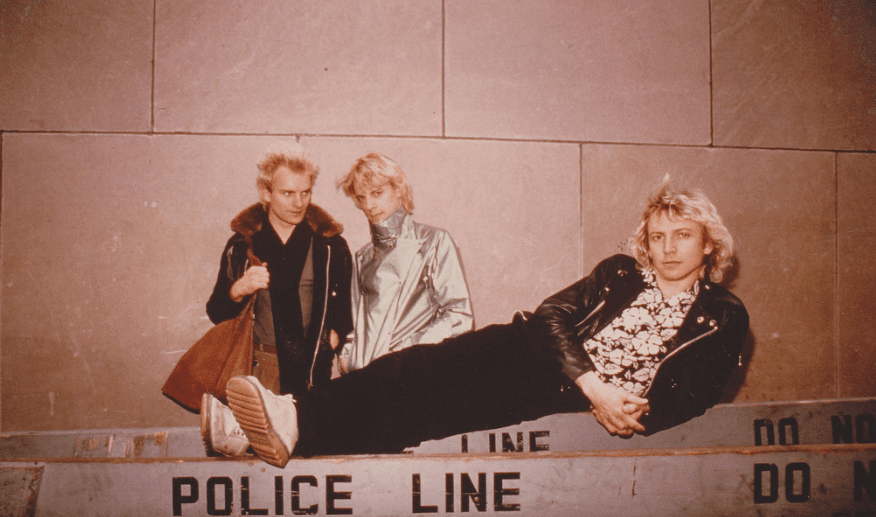
After his father passed away unexpectedly in 2016, Tom had set his sights on making a film about his dad’s legacy with the Police. “I got a phone call from my brother saying dad had died that morning of a heart attack.
I can’t believe that we never sat down and talked about all of these details. Maybe I thought ‘I’ll just ask him tomorrow.'”
Among the people involved were both Kevin Godley and Lol Creme, Trevor Horn of the Buggles, Andy Summers and Stuart Copeland.
The idea reached the top desks of media companies such as Netflix, Amazon, and the BBC, but none felt the Police were major enough to produce a film about. After trying various other production companies, the covid pandemic hit and Tom’s project fell through.
He hopes that one day the project will pick up again and he can shed a light on his father’s contributions to music, as well as the notion of unsung heroes.
“If you asked your average kid in the street what a music producer is, and who George Martin and Quincy Jones are, they’d ask ‘what’s a producer?’ I think you’d have to be a music fan to know.
“I think producers and engineers are unsung heroes by proxy. It’s what people in the music industry are. I think just by definition that’s what that’s what they are.” OA
Featured image of Graham Coxon via Flickr


0 Comments