
Is there a formula for musical creativity? Sachin Shaw talks with the man who developed Keane, Dido and countless others to understand how to write truly creative music.
Self-described ‘vibe-facilitator’ James Sanger has the CV to end all CVs. Keane, Dido, Phil Collins, Bryan Ferry and Brian Eno are all beneficiaries of his musical production services – with Collins even gifting him a custom engraved Tag Heuer after their collaboration on 2002’s Testify. It is therefore funny to think that it has been 20 years since a major label has rung him up.
“Look at the major label industry right now. The songs are very fractured; the artists are very vacuous and like puppet marionettes. They are just basically actors in a film that has been created by the labels to sell a certain agenda – that is quite far divorced from what people are really feeling.
“Those breadheads… they want you to be queuing up and buying Mars bars and going to McDonald’s or whatever it is. They don’t necessarily want people to express the uncomfortable or, you know, they don’t want people to have a voice. They want people to just be taught to do what they’re told. My attitude really is about giving people a voice; giving artists a voice.”
Maybe not, then. Sanger is the polar opposite to ‘get paid and go home’ – it was this that made him appear on Bryan Ferry’s radar in the 90s, whose ears pricked up at his ambient techno records and sought his unique sounds.

“Over the years, I’ve become less and less interested in contributing to the kind of music industry agenda, as it were. And I’ve become more and more interested in promoting bands and artists that want to propagate positive change in the world.”
As a result of this, James exists as an excellent case study for the ingredients for creative writing from the perspective of a man once enlisted by the greats – becoming one himself in the process. His music development resort-of-sorts in Normandy is as colourful as the Hawaiian shirt he wore to our interview. Vibey Studios is named after Phil Collins’ nickname for Sanger – James ‘vibey’ (thanks to the latter’s chronic overuse of the word). So what does it take to have vibey creativity, according to James?
VISUAL PLANNING
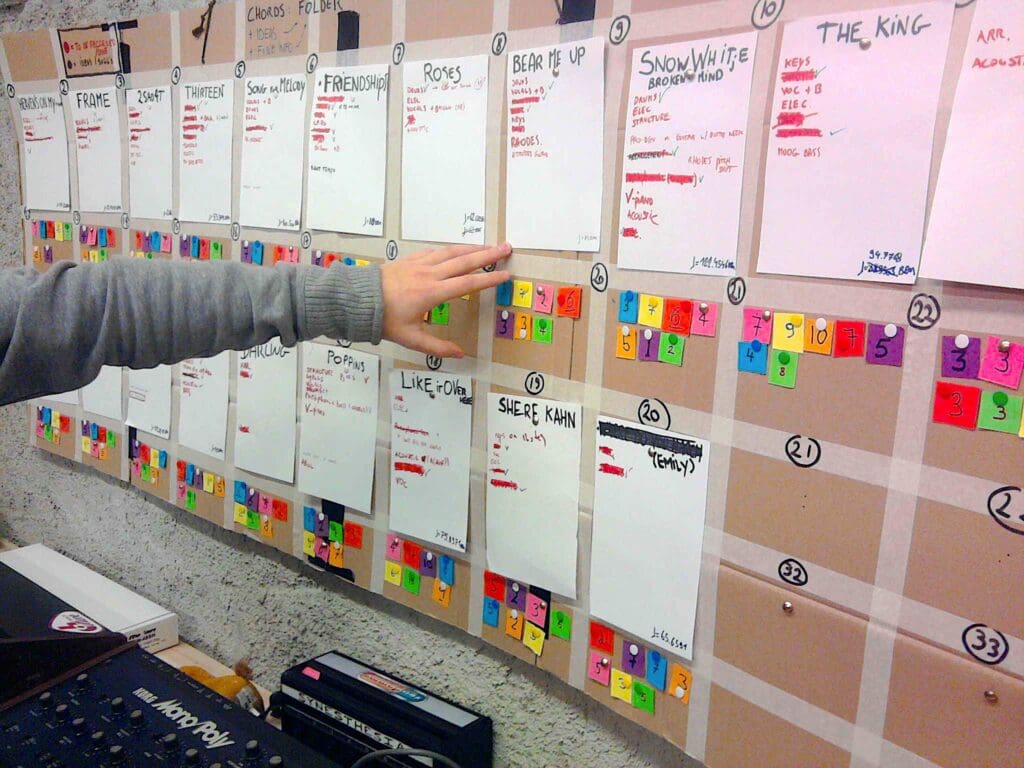
“I have various techniques that I employ with the artists I’m developing that are based on unlocking creativity and reconnecting with an artist’s inner voice.
“I get people to do collages of who they see themselves as an artist – a visual collage is a very interesting way of seeing how the artist sees themselves. I also do a thing called the ‘vibe venn’ where I ask people to think of three major influences and show how they intersect each other. These are visual exercises that I get artists to do in the development period.”
Planning phases for a collaboration may start months in advance, so both James and the artist can develop a bulletproof plan. This relieves pressure, reduces stress and allows a natural flow of creativity. “I’ve seen that in the past in sessions people end up not doing anything because they don’t know what they’re doing. I haven’t seen that for 20 years, but I’ve seen that on other sessions with other producers. And that’s the kiss of death”.
LET THE SUBCONCIOUS DO THE WORK
“What I learned from Eno was that you can’t just be into music. You have to be into other stuff as well. If you get stuck in your music thing, go and finish your artwork [for example]. Because by the time you finish your artwork, the thing that you’re stuck on in the music will have sorted itself out. And that’s how it happens a lot”.
Advice we have all heard before – if your brain is fogged, leave and come back to it. But this is much harder to follow than it sounds because if you are spiraling down a ‘I can’t do this’ rabbit hole, getting up and leaving often feels like a cop-out. But take it from the guy who developed Keane’s Hopes and Fears signature sound with them – you HAVE to do it.
ENVIRONMENT AS AN INSTRUMENT


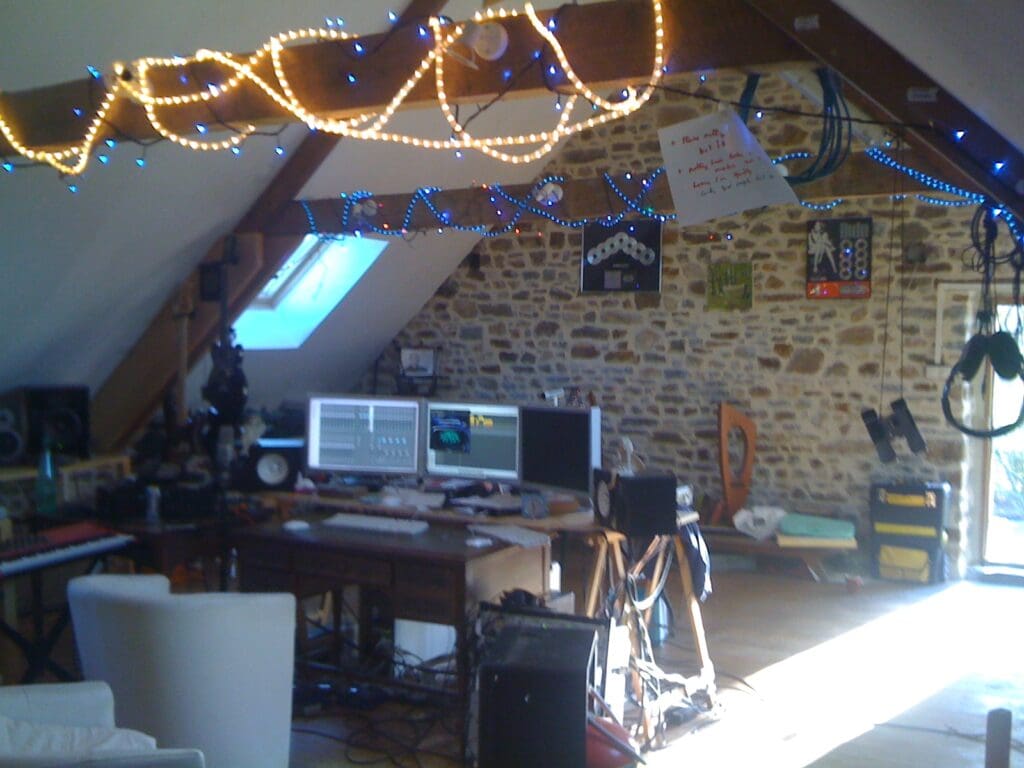
James’s formative time with Eno helped forge his understanding of musical space in reality – findings that directly influenced the building of Vibey Studios: “I modelled my studio a bit on his studio in that it’s not just one big desk in a room with a static dry recording room next door through glass sheets. I don’t do it like that. For me, recording music is much more like having lots of different cool instruments around that you work with. It’s like a craft studio more than a recording laboratory.”
Within James’s home are also apartments for visiting artists with interfaces that all connect to the main studio. Recording space also goes far beyond a room with the big desk. In fact, James doesn’t even use a typical all-in-one deck. There are dedicated rooms for drums, percussion, basses, guitars, keyboards, with separate vocal booths and satellite studios all connected to a control area. The more you can let the music you’re writing breathe, the larger breaths the music can take.
PRODUCTIVE CHAOS
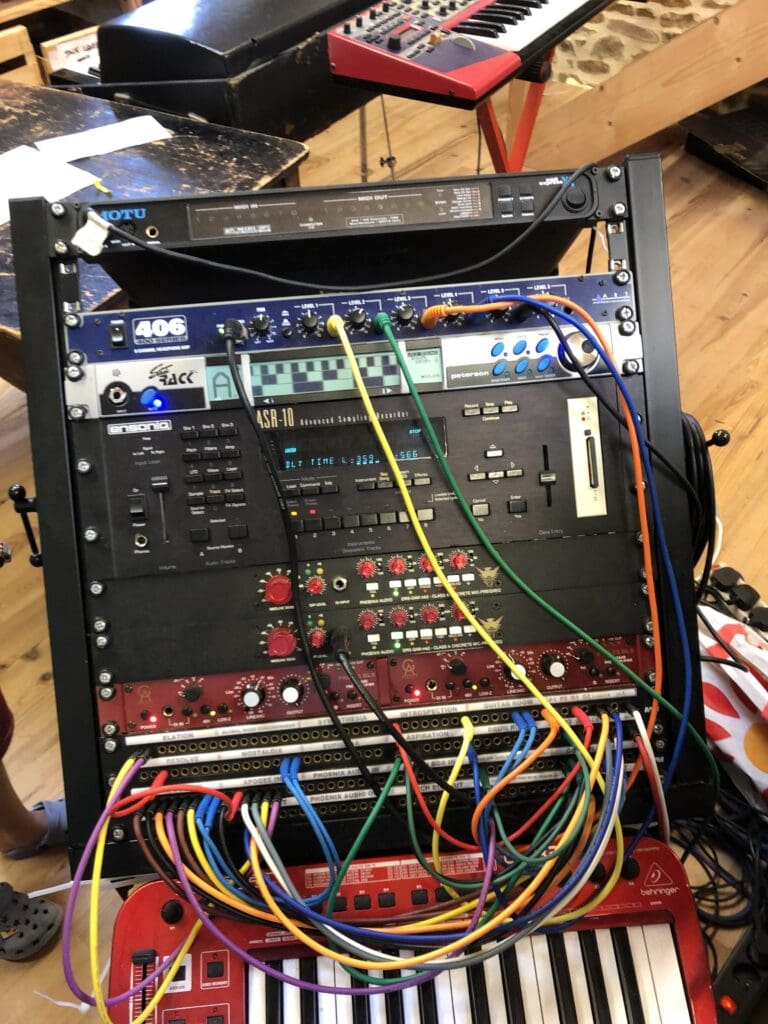

“My most recent room is what I call my modular room, which is basically just a room with all modular synths in it. I do experiments in semantics and arcane, weird stuff. I like to build strange speakers, mess around with copper wires and do cymatics where you film the effects of powders on water”.
Given Sanger’s roots as the guy who can provide vibey sounds, a place where he can frankenstein-together noise makes total sense. After all, how can you discover music without pushing the limits of what music can be? Limits are boring. After all, you can always reel things in if you realise an idea if a bit much.
@james.sanger is his Instagram handle – go and check it out. I watched him use a synth to summon sounds like it’s for a frog rave. James articulates that experimentation allows for creative elasticity. So go stretch some rubber bands.
ENSURE A MESSAGE
Creative writing must reflect a genuine expression, rather than a manufactured product. Because other people have done something well, does not mean their template has to be followed to a T.
“You’re dealing with magical occult arts. If you’re just copying and pasting a hundred thousand other proceedings songs, the magic is diluted to a degree of homeopathic levels.”
A personal ‘drive’ for a piece not only provides a pivot point but sets a clear end goal. That clarity is also a part of the ‘vision’ point, as a clear horizon allows for a better execution of the intended message.
“I feel people need to have their feelings represented artistically rather than the feelings of a very very small group of breadheads.”
“My attitude really is about giving people a voice, giving artists a voice rather than using music to tell people what to do”.
So – what do you have to say? How can this character seep itself into your work?
CONCLUSION
“Once the record company tells you what they want it’s already boring and too late” James claims. Although he said it literally, this sentence is incredibly transferable across any creative activity. Individuality is paramount and true creativity can only be unleashed when you find your individuality and give it the space and air to fly free.
Sanger was once sought for his understanding of creativity and applying it within other artists’ works. However he is clearly at home in Normandy helping small artists be their unapologetic selves.
Countless producers, mixers and programmers would simply have gone with what was required of them by the labels and put pen to paper on lucrative contracts. James walked away from this world with zero regrets. But to go so far as to purchase a residential property dedicated to realising your dreams of artistic development takes a very respectable madness.

0 Comments