
Touring percussionists are an often overlooked yet essential part of a live show, but they are very rarely in the spotlight. Sofia Ali meets the touring musicians who join Arctic Monkeys and Blossoms on stage.
Davey Latter is a percussionist and a drum technician for Arctic Monkeys. He’s in Los Angeles, where it’s approaching midday. Under a bright blue sky, he strolls around his garden, cluttered with debris of his life between tours; the rescue dogs, drums in the garage, the roadie toolbox adorned with Arctic Monkeys stickers next to his daughter’s toys.
Davey’s path to where he stands today, alongside Arctic Monkeys, is a well-worn one for people like him in the industry. He’s been a musician since the mid 1980’s, playing in many of his own bands over the years. But sadly, these bands were not successful enough to make it financially viable, prompting the switch to the roadie side of the industry. Since 2008, Davey has worked as a drum and backline technician for a number of bands, joining some on stage as a percussionist.
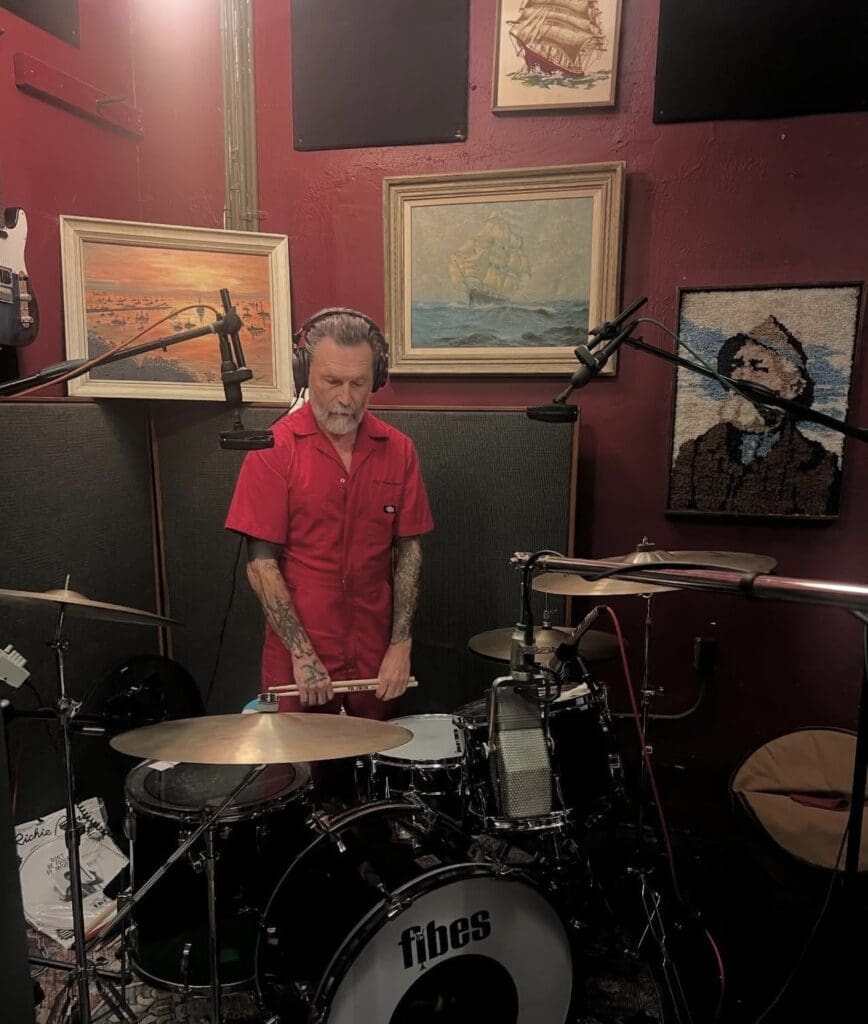
“I said, ‘If I’m gonna do this, just work for bands you love,” he says in his Californian drawl. He stayed true to his promise, working with legendary acts like Queens of the Stone Age, the Pretenders and Jack White.
It is more common than you may think for bands to utilise touring musicians; it’s a practice undertaken not only undertaken by Arctic Monkeys, but also The Rolling Stones, Fleetwood Mac and U2, just to name a few. They add percussion, horns, strings and more, bringing what was recorded in the studio to life on the stage.
Davey first joined Arctic Monkeys after they let go of their previous drum technician whilst on tour and needed a quick replacement. He got a call asking if he could be in Texas the next day. And that was where it started.
“I was just a drum tech, then Alex asked me to play percussion for him. So, I do double duty with them,” says Davey.
John Simm, is also a multi-use, multi-talented guy on tour. He’s a production manager, tour manager, sound engineer, drummer and percussionist. Most notably for indie-rock band Blossoms.
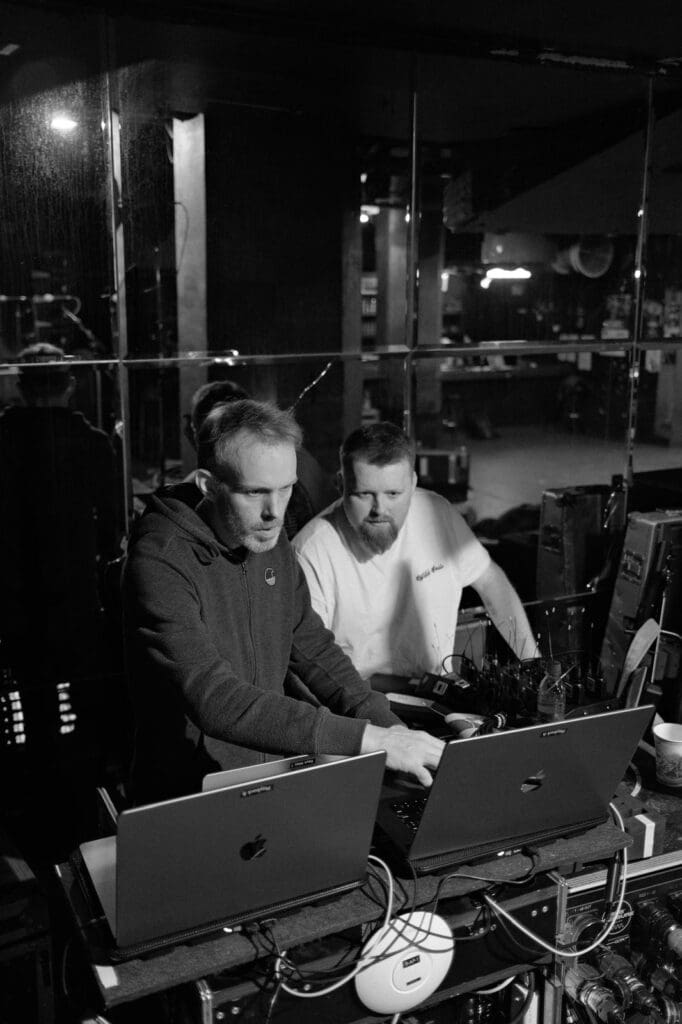
He explains why touring musicians like him and Davey are needed on stage: “It’s quite difficult to get across the full scope of an album because you spend so long in the studio, and all the little intricate details on certain songs give a very specific feeling or emotion. You’ll get 80% of it just playing the basics- drums, guitar, bass, vocals, keyboards.
“But to get that final bit, you need all elements of the songs to be part of the live show. And you can put that on track, and that’s generally the accepted modern way.”
But that is not the sound Blossoms were aiming for. “They wanted to be a bit more live and make every show different. The energy changes a lot when you have more people on stage, everybody pulls in different directions and does little different things every night.”
Davey credits the other musicians who take to the stage with Arctic Monkeys: “Especially with Arctic Monkeys, there are three or four utility guys. It’s not just the band; it’s Tom Rowley on guitar and Tyler Parkford on keyboards. It’s a four-piece band turned into a seven-piece band.
“When they make these records, there’s a lot going on. With the Monkeys there’s lots of tambourines, shakers and bongos.”
And on the most recent tour, Davey was the first sound the audience heard. “We started those shows with Sculptures Of Anything Goes. And it’s me on the drum pads. It’s a lot of pressure.
“Don’t fuck up,” he says is what goes through his head.
But despite his vital role, he does not feel a part of the band: “It’s always just going to be those four guys at the nucleus.
“I’ve been in bands and done the records and photo shoots. With these guys I’m literally just a utility guy. For that hour or two on stage it does feel like I’m part of it. Then, when they finish, I’ll change into my roadie scrubs and start putting away.”
Although it does bring a welcome but somewhat peculiar balance to life. Playing in front of tens of thousands of people, whilst staying fairly anonymous. Something Arctic Monkeys have not been able to experience for many years.
Davey says: “The bands I was in were never famous or that successful. Now, once in a while, I’ll be walking in the town we just played in, and somebody recognises me. Like, yeah, I’m the idiot with the shakers. But I feel bad for Alex and all those guys. Can’t even go outside their hotel. Gnarly.”
But this also raises the question of whether they get the credit they deserve?
“There’s no credit necessary and no credit wanted. I don’t think audiences know or appreciate it, and I’m totally fine with that. I know my place in these bands, it’s a very minor role,” Davey says bluntly.
John has worked with Blossoms in varying capacities for a decade, forging a firm bond. “They’re a great bunch of lads to work for. We’ve got a good camaraderie between all of us because we’ve all been together doing this for quite a long time. It feels like we’re in a really good spot where we’re just sort of working off the energy of each other, trying to make the best show we possibly can.”
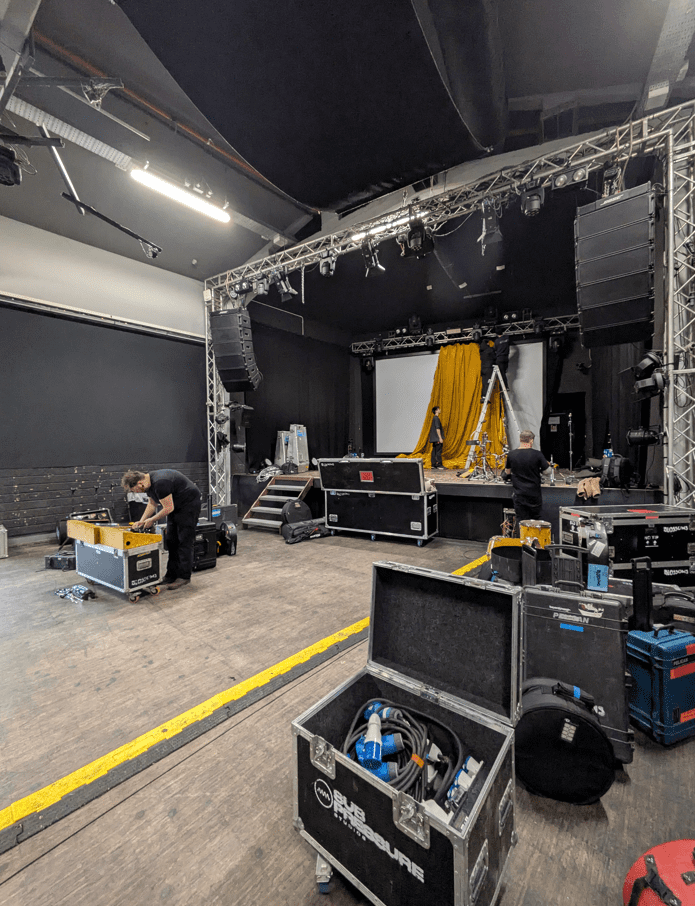
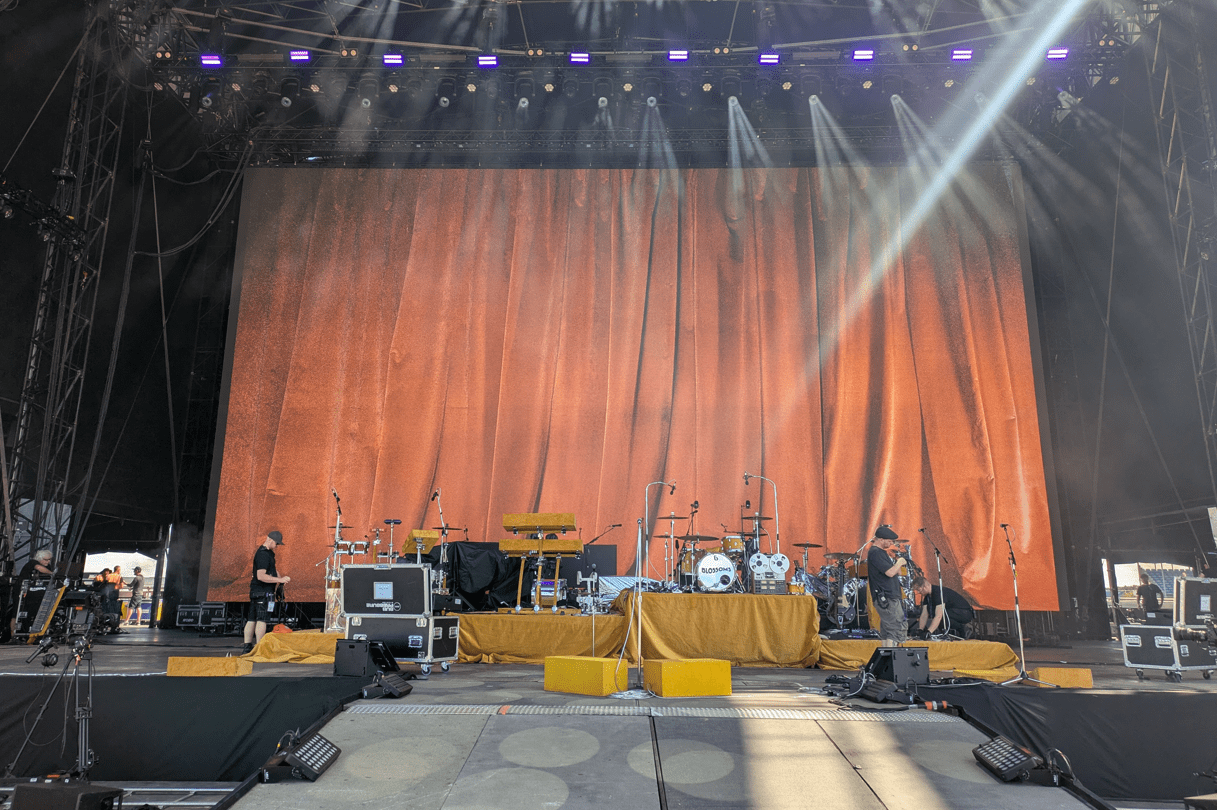
It’s unsurprising these relationships are strong, given the amount of time spent together, Davey talks endearingly about the Arctic Monkey’s guys, calling frontman Alex Turner ‘Al’, and describing how they hang out between tours. But away from the working relationships, he’s got something extra special to thank the band for.
It’s down to them that he met his wife. It was 2014, he was on stage at Finsbury Park, and she was a fan in the VIP section.
“She was standing in my roadie area, kind of crowding my space. I was up there playing the tambourine and giving it an extra ass shake because I knew she was watching. We kept making goo-goo eyes at each other.
“Next thing, we’re eating pizza together. Then I had to leave the next morning to come back to America. We promised to keep in touch. Then she shows up on my doorstep with her luggage, saying she was moving in. Next thing you know, I’m married to her.”
But working in music is not always this romantic or glamorous; John’s true passion lies in playing, but having to take on so many job roles, highlights just how unstable and unpredictable a job in music can be. “If I had the option to be a full-time drummer and percussionist, I would do that.
“But there’s not always 100% of the work available to you at all times. So, you need to be able to chop and change and do whatever you can to continue working as a self-employed person in the music industry.” While he does enjoy his varied work, sadly it’s a necessity to survive in the sector.
“There’s always stress about lining up the next one. But it always seems to work out,” says Davey.
When John is not performing on stage, he works as a session drummer, often remotely from his home studio in Manchester. “I love this little point where you are briefly involved in a band for about six hours, and I try and fulfil all these things that they’re looking for. I love that creative hit of doing each of those individual things, then moving on to something else.”
The two are aware of each other and are quick to tell me how great the other is. By now, both have been in the industry for a while; their attitudes have changed. But life on the road is tiring, particularly when jumping from one job to another.
John says: “I know I used to say yes to absolutely everything when I was younger, I’m trying to be a bit more discerning now I’ve got a bit older. But it’s hard. You still want to say yes to everything because you want to work with as many people as possible, because it’s just really good fun.”
And, for Davey, touring with a band as big as Arctic Monkeys means insane shows are pretty much in the job description. Like a show in Argentina on the last tour, where they played to a festival crowd of 100,000.
“I thought the whole world was going to collapse. We opened up with Brianstorm, and it was just too much for these people. The security guy came out and told Alex we’ve got to stop the show and calm down for a second. I’ve done a million shows with those guys, and we’ve never had to stop a show because the crowd was exploding. I’ve never seen so many people lose their minds. How do you get 100,000 people to take one step back?”
Of course, there was one big question for Davey. Does he think Arctic Monkeys will be making a return in the near future?
“I’m not one to say- I sure hope so. I hang out with Matt Helders like every other day, and I ask him the same thing. He just shrugs.
“I’m counting down the days till they start back up again.”
John and Davey prove that a band is so much more than it’s core members. While audiences may never know their names, they are undoubtedly crucial elements to live shows. Yet, it is clearly not an easy profession to work in, jumping from one job to another in order to make enough money. But they do it for their love of music and to give us a show to remember. SA
Featured image via John Simm

0 Comments