
Beyond the desk, producers have a rarely-discussed skillset that makes or breaks an album.
To those not involved with music production it’s easy to fall into the trap of thinking producers simply man a console, fiddle with switches and tell artists their demo triggers are too quantized. Let’s be honest – an expert understanding of Pro Tools is invaluable to a project and immediately justifies the enlisting of a producer. However, with the internet, learning the technical side is easier than ever.
Technological revelations in-mind, what truly separates a good producer from a great one is a set of soft skills – a social prowess that can prevent disaster and ensure perfection. Two men who have amalgamated these abilities over decades of experience are Russ Russell and Neil Haynes. Russ and Neil not only have decades of rock and metal production experience under their belt but have also built their own studio, The Parlour, in Kettering. Russ’s work with artists like Billy Gould (Faith No More), Dirk Verbeuren (Megadeth), Napalm Death and At The Gates has made him a mainstay in extreme music. If you listen to anything with a heavy guitar there is a good chance that Russ is your favourite producer’s favourite producer. Neil on the other hand has a deep connection to distorted music’s underground scene – producing, mixing, engineering (and therefore nurturing) upcoming bands from across the UK.
Using their combined expertise, we can build an understanding of how a producer uses psychology and therapy techniques in their craft.
READING THE ROOM (THIN-SLICING)
“It’s amazing how quickly you can suss people out. I guess that’s just the experience side of it, but you can tell who’s got their shit together, who’s going to be a pain in the arse, who doesn’t care and who’s only there because he drives the van” claims Russ.
In psychology, thin-slicing refers to the ability to make accurate judgments based on very limited information. Studio bookings run from multiple months down to a single day. A producer must make snap-decisions and inferences on a person’s character to understand their vision while also making meaningful changes without snatching the project from its creator.
Understandably, people are incredibly precious about their music. This can wholly affect a producer’s tone when suggesting change, as Russ explains: “People don’t want somebody with a different long-term view to take it away from where they were intending.
“Some are defensive in that way right from the start, before you’ve even said anything. You can tell: oh – I’m going to have to be gentle and present my ideas gently and clearly so they don’t feel attacked.”
Neil chimes in, explaining a producer’s role is not only knowing when to be gentle but when to dig down: “Some people are just bad at putting across what they want in the first place… and they just sit there getting frustrated because they haven’t actually explained what they want.”
THERAPY SESSIONS (PRIMING)
With a deep devotion to one’s music comes a heavy emotional attachment and sometimes a severe ‘red light syndrome’. Thus, a producer can find themselves as a therapist – coaching, comforting and guiding a player through a session. “Some people have full on meltdowns” Russ confesses, insisting they cannot play the music. “Sometimes you throw everyone else out of the room to start with because for me (and most singers) it’s never good to have a room full of people looking through the glass”.
Russ emphasises the value of a human touch when putting musicians at ease: “sometimes a little chat is enough. Sometimes we have to go for a walk. Sometimes we go to the pub”.
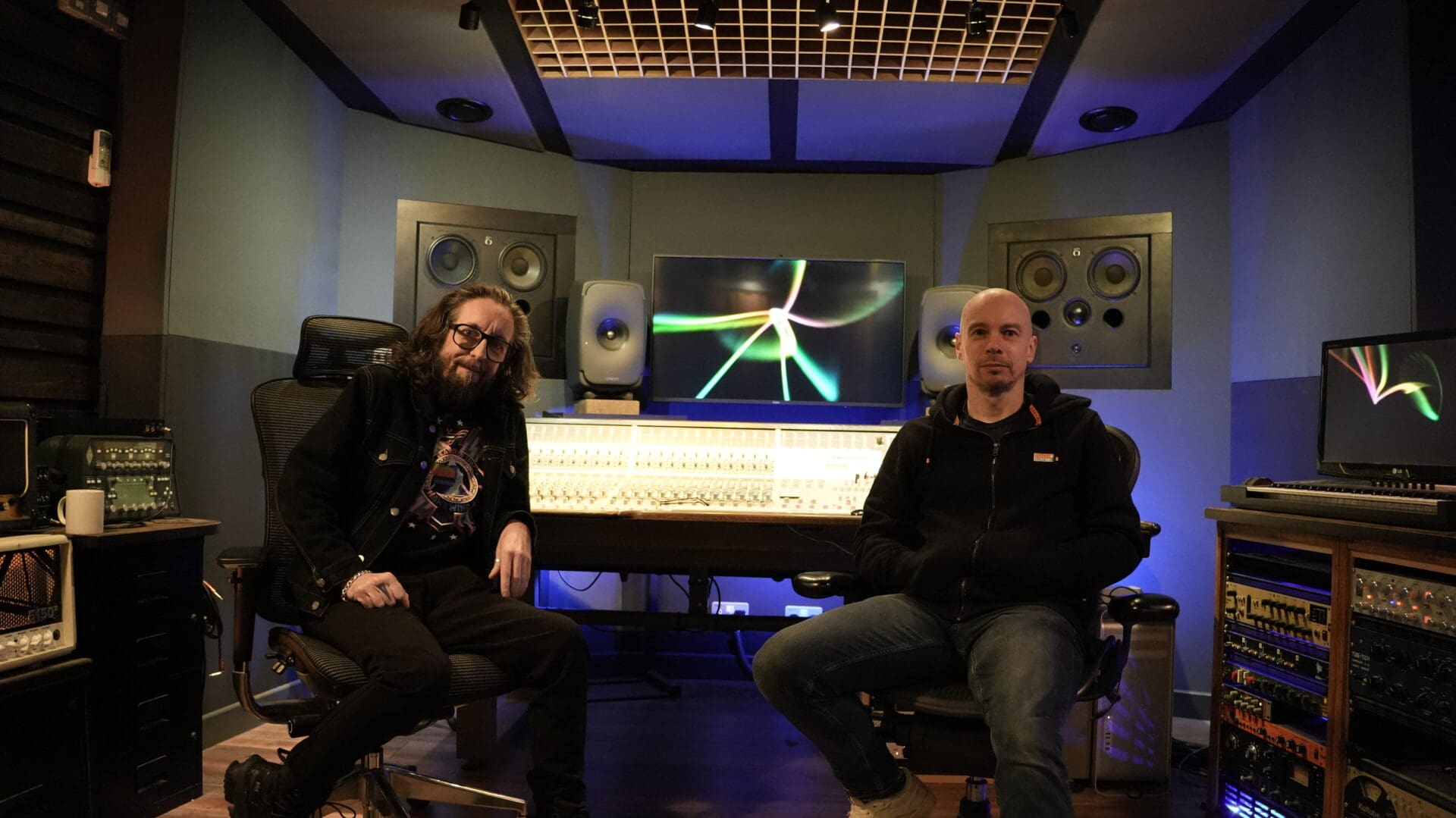
“Sometimes you have to do stuff to the room, make it darker or put up some candles and fancy lights.” Russ gestures through the glass to the coloured LED strips in the ceiling of the recording room. Then there’s the sound itself. “I can set up a decent headphone mix but it might not be exactly what they are after. And maybe they can’t explain what they’re after so sometimes you have to play with that.”
Shaping an atmosphere for the perfect take requires a perfect understanding of the person in front of you. Neil claims that he even had a drummer record his parts naked to better relax into the moment.
TEMPERING EXPECTATIONS (REALITY TESTING)
Being well-prepared for a situation is universally regarded as being beneficial for odds of success. The problem a producer may find himself at the crux of is having to remind people of the definition of ‘prepared’ and recalibrate their expectations. Neil reports that “some people think they just come in and you press a magic button”. Plus, it’s not too uncommon for people to turn up only having written once in a rehearsal room.
“I always feel awkward on the ones where it’s awful and there’s no way of getting around the fact that it’s completely awful and yet someone’s spending money [on it]. I usually just say: look – sack it off for now, work some stuff out and let’s do it later.”
Countering are the times where a client has to be convinced of the importance of small playing errors, Russ reveals: “It needs some magic. Quite often a little mistake is what you latch onto and you go oh I love that!
“Sometimes perfection is not cool. You want a little bit of movement in something”.
There was once a man who asked Russ to make him sound like Robbie Williams. The only issue was that he had a broad Lancashire accent, couldn’t sing, write songs and lacked the talent to ever gain these skills. Despite his family’s efforts to let him down gently, he insisted on being a pop star – even going so far as to mix his tracks at Abbey Road and employ Robbie Williams’s backing vocalists. Russ describes working with him as a “nightmare”. Some days it was funny, some days it was just sad. Other times it was just horrible.
The moral of the story is that it is important to know your material and have it well-revised. A producer can only add a sparkle once there is a complete-enough product for them to work with.
LIGHTING THE PATH (CHOICE ARCHITECTURE)
On the point of refining a project there may come a time when the producer makes an executive decision. However, as previously mentioned, a producer cannot come across as stealing control.
“It’s really good if you can present people with two options” says Russ, while Neil nods in agreement.
Both men employ the same decision-pathing techniques as opticians to find the best prescription: flipping between A and B. In this case, however, A often represents the artist’s choice and B the producer’s preferred method. Sometimes the client knows which is which and other times it’s a blind test. Either way, the right option is always selected.
Crucially though, Neil makes a fair point that “it’s not the wrong one if it’s what they want. Is there a right or wrong? It’s art, so someone’s ‘amazing’ is someone else’s ‘absolute crap’. It’s only wrong if it’s going to take you on the wrong path at the end of the day”.
On this point, Russ will only sit down to re-assess a project’s direction if he observes the goalposts being drastically altered:
“It takes a million decisions to make a record and you’re choosing as you go along. After a while of going down a path you can see the end – you can see the journey and where it’s going to end up.
“If halfway through somebody throws a massive curveball in, you really have to explain to them clearly: do you understand this is going to change the whole trajectory? Because I thought that this is where we were going. You were with me and now you’ve just left the path and you’ve gone over there somewhere. It’s gonna change shit.”
WALKING ON THE SKY (TELEPATHY)
Telepathy isn’t exactly a technique employed by psychologists (not good ones at least). But in the event of something special being enjoyed over a long period, it is a power that producers and players have in bucketloads.
For 26 years Russ Russell has been the producer for metal legends and world’s shortest song record-holders, Napalm Death. He also works closely with bassist Shane Embury on his solo projects: “It all started when we were on the tour bus in the back lounge.”
“Me and Shane are now properly telepathic. Sometimes hours will go by where something will happen and we just look at each other and carry on. We don’t even need to discuss it because we know exactly what’s going on.”
Due to Russ and Shane’s hours on the road and in the studio, both men can simply dim the lights, get to work and watch the days roll by.
Both Neil and Russ carry a calming presence I have never come across before. It is clear that this natural character is what makes them both excellent producers and the perfect architects for The Parlour (appropriately named as it is a converted milking parlour). Beyond hosting equipment and bestowing technical knowledge, the third skill of a producer is far less visible. It involves reading a room, diffusing tension, project management and constantly refining a project to ensure that a client’s vision is met. SS
Featured image via Sachin Shaw

0 Comments